
A century of academic excellence
Historical context and founding moment
In 2018, we celebrated the Centenary of Romania, in 2019 the Centenary of Banat, and in 2020 the centenary of the Politehnica University of Timisoara. It is interesting how history sometimes brings events together and connects them. The aspirations of the people of Banat to establish an institution of higher education would not have been possible without the Great Union, just as the unification of Banat with the Motherland was essential to creating the momentum that led to the establishment of the Politehnica School by royal decree signed by His Majesty King Ferdinand on 11 November 1920, thereby elevating Timișoara to the status of Civitas Academica. In turn, through its very mission, the Politehnica made an outstanding contribution to the economic, social and cultural development of Timișoara, Banat, Romania and beyond its borders.
Timișoara at the beginning of the 20th century: an industrial vocation
The beginnings and early forms of education in Timișoara are intertwined with the city’s centuries-old history. The first documentary references to the existence of schools date back to the 14th century. During the second half of the 19th century, favourable conditions emerged for the expansion of education at all levels.
The consolidation of capitalist relations and the Industrial Revolution stimulated the economic life of Banat, a region rich in natural resources. New industries emerged and developed, including metallurgy, extractive industries, textiles and food production, alongside an extensive railway network. Timișoara became an important city and developed at a rapid pace.
At the beginning of the 20th century, Timișoara was Hungary’s second most economically important city after Budapest. A Hungarian academician wrote at the time: “The German housewife cooks with flour from Timișoara; the Englishman wears shoes from Timișoara; the bell made in Timișoara rings in Romania; the Timișoara hat reaches France and Belgium; carriages from Timișoara are driven in Serbia; children in Bulgaria eat sweets made in Timișoara; the Egyptian lights his cigarette with a match made in Timișoara.”
For the large capitalist companies based in Vienna and Budapest, investing in Timișoara offered multiple advantages. The city was situated at the heart of a region rich in raw materials, close to Romania and the Balkan states, which absorbed its manufactured products. It was also a multilingual urban centre where workers from elsewhere could settle and adapt without difficulty or feeling like outsiders. Timișoara was the first city in the country to develop an ambitious programme for industrial expansion and development while protecting small-scale industry. Indeed, the city had long had a vocation for technology and was a multicultural place where different ethnic communities worked together, each contributing to the economic development of the region. The establishment of a Politehnica here was therefore no coincidence, but a natural consequence of these circumstances.
The long road to establishing the institution
An entire gallery of distinguished figures of the time devoted themselves wholeheartedly to what would become the founding act of the Politehnica School. Many of their gestures, words, ideas and, above all, actions have remained memorable, shaping the history and tradition of the School.
The long road to establishing the institution
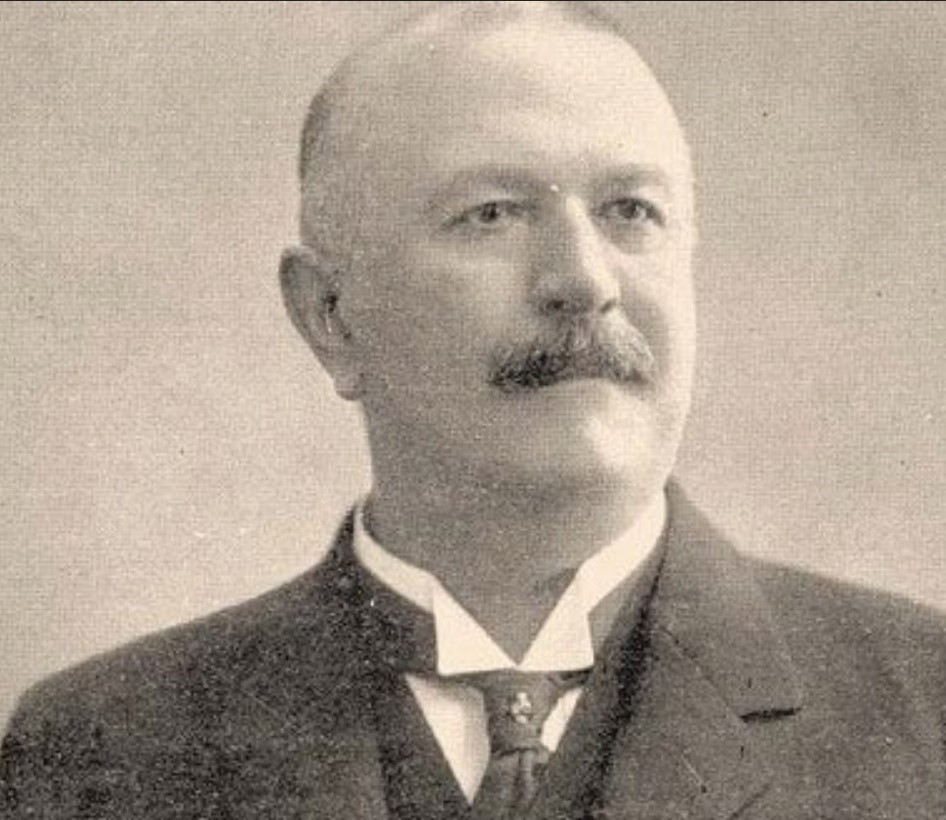
The idea of establishing a polytechnic school in Timișoara emerged as early as the beginning of the 20th century, when the Austro-Hungarian Empire sought both to promote the industrial development of Banat and to satisfy the aspirations of the region’s Romanian majority. Following a proposal made at a meeting of the Municipal Council on 26 November 1906, Mayor Carol Telbisz submitted a memorandum to the Hungarian Ministry of Public Instruction in Budapest in 1907 outlining the need for a polytechnic school. However, the proposal submitted by the Minister of Public Instruction to the Budapest Parliament in 1911 was rejected.
Following the failure of these initial efforts, on 29 April 1912 the Municipal Council approached the distinguished Professor Dr. Kornel Zelovich of the Budapest Polytechnic University, asking him to support and substantiate the case for establishing a higher technical institution in Timișoara. Professor Zelovich prepared a meticulously researched memorandum demonstrating the need for a second Polytechnic University in Hungary. The distinguished professor noted that, among all the cities that had sought to establish a university, “Timișoara alone properly recognised the importance of technical sciences, understanding, when the question of new universities arose, that it should draw the attention of the authorities to the need to establish a second polytechnic school... The city has developed a thriving commercial and industrial activity that surpasses that of all our provincial cities.”
The outbreak of the First World War temporarily brought these efforts to a halt. Nevertheless, the ministry appointed a commission consisting of the rector of the Budapest Politehnica and nine professors to address the matter together with the Timișoara City Hall. The efforts resumed in 1916, and in February 1917 the commission presented its conclusions, supporting the establishment of Hungary’s second Politehnica and recommending Timișoara as its location. On 23 November 1917, in support of the project, the City Hall decided to allocate 8 hectares of land on the left bank of the Bega River for the Politehnica’s buildings and to adapt a school building or barracks for the temporary operation of the institution.
The events at the end of the First World War temporarily interrupted these sustained efforts, which stand as a testament to an entire generation of people committed to the future of Banat and the advancement of its inhabitants. The Great Union of 1918 opened new hopes for the people of Banat of fulfilling their aspirations for a scientific and economic mission that would genuinely reflect the interests and needs of the region’s majority population.
From the summer of 1919, when Romanian administration was established in Banat, the idea of founding the Politehnica School in Timișoara gained strong support across the region’s intellectual and public life. Cultural and scientific figures such as Traian Lalescu, Emanuil Ungureanu, Miron Cristea, Valeriu Braniște, Cornel Cornean, Stan Vidrighin, Traian Birăescu and Ascaniu Crișan came together to establish the Banat Cultural Association, whose foremost priority was the establishment of the Politehnica School in Timișoara.
The vision for the Politehnica was part of a broader conception of the role the new institution could play in the cultural life of the region. Romania had emerged from the war with a severely weakened economy, making economic reconstruction an urgent priority. The existing School of Bridges and Roads in Bucharest could not possibly meet the growing need for highly qualified technical specialists in a country with newly established borders and a rapidly developing industrial sector. In these circumstances, the establishment of the Politehnica School in Timișoara was no longer simply an aspiration, but a natural and pressing necessity.
The region’s natural resources were abundant and could only be harnessed through industrial development, which in turn depended on the quality and expertise of its engineers. A polytechnic school in Banat would contribute to the development of cultural and scientific life, the growth of Romania’s technical intelligentsia and the affirmation of Timișoara’s technological spirit, which had already produced a series of pioneering achievements in the field.
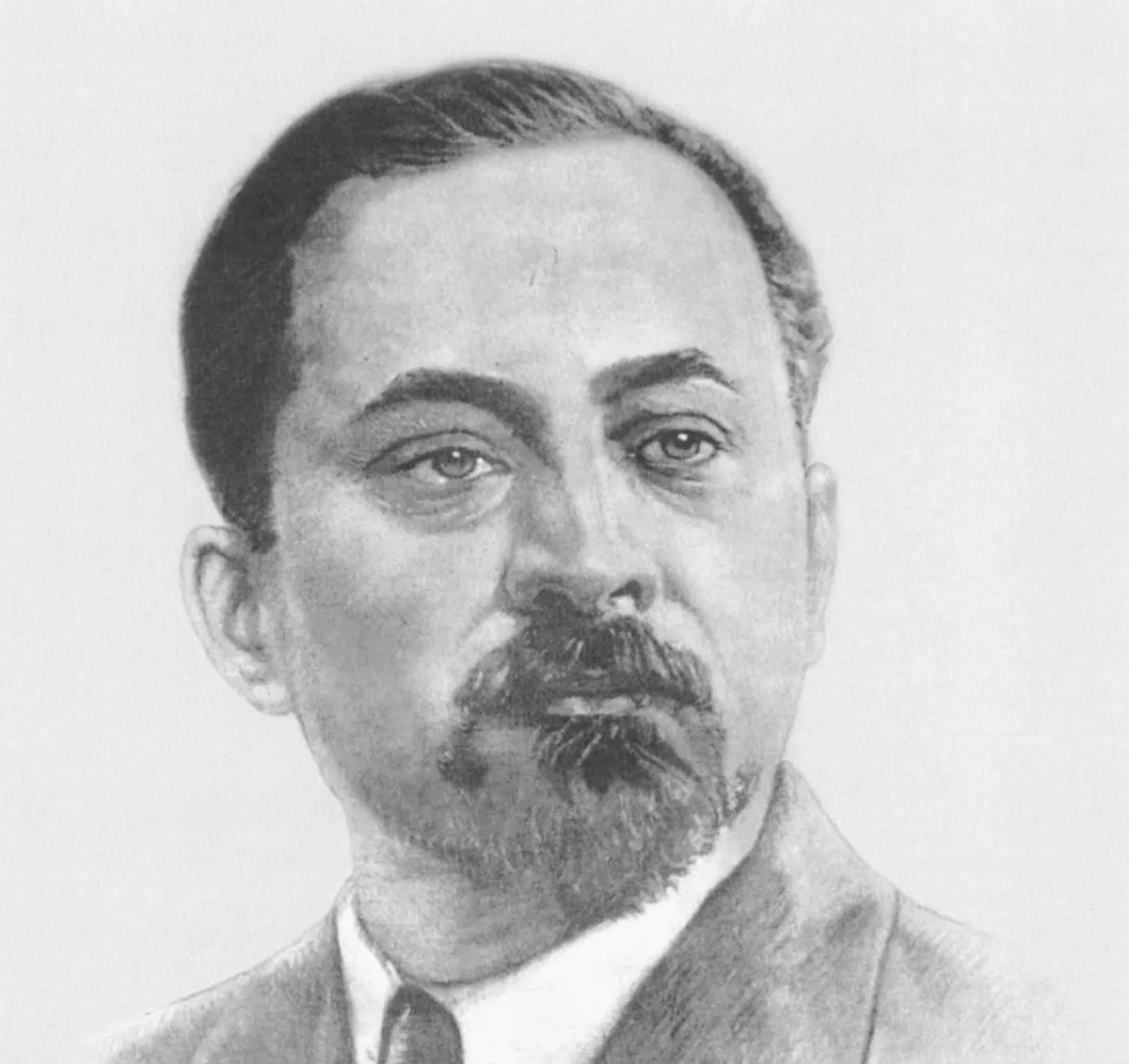
On 5 November 1919, Traian Lalescu argued in an article published in Banatul Românesc that “Beautiful and modern Timișoara, the most populous provincial capital in Romania after Bucharest, a city of industry par excellence, has no institution of higher learning. The province of Banat, so advanced economically and socially thanks to its natural wealth and the hard work of its inhabitants, thus finds itself, culturally speaking, in a position of marked inferiority compared with other Romanian provinces.”
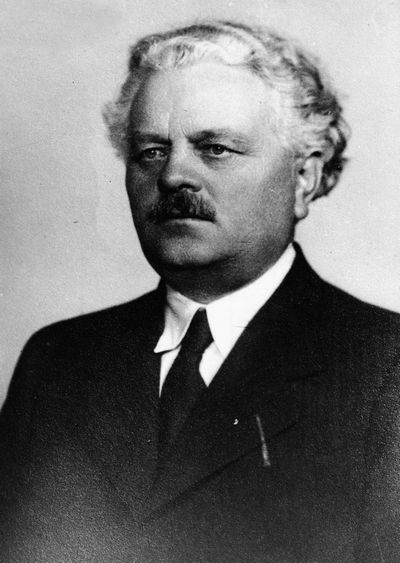
Stan Vidrighin, Mayor of Timișoara and later Rector of the School, called on the Ministry of Public Instruction and Religious Affairs, in a memorandum dated 27 February 1920, to establish a Politehnica School in Timișoara: “Arguing for the need for a Politehnica School in Romania is the easiest thing to do ... Timișoara is an industrial centre. It now has more than 60 factories. In this respect, no other city in Greater Romania can compare with it. Timișoara, therefore, taken on its own, is pre-eminently an industrial city, with a developed and more advanced economic life than other cities.”
The Royal Decree and the first steps of the “Politehnica School”
Conditions became favourable with the promulgation of Decree-Law No. 2521 of 10 June 1920 on the establishment and organisation of polytechnic schools in Romania. The new legislation transformed the former School of Bridges and Roads in Bucharest into a polytechnic school, paving the way for the establishment of similar schools in other parts of the country.
In September 1920, the Ministry of Public Works, which was responsible for technical education, appointed a commission to work with local authorities in Timișoara to assess on site the conditions for establishing the Politehnica School. This enabled the preliminary studies to be completed, setting out in detail all the requirements for establishing the School.
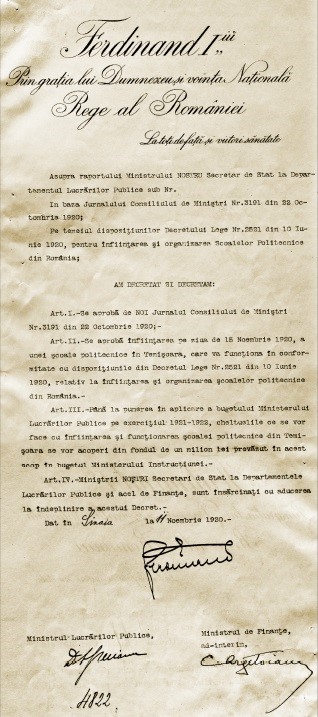
In the same year, on 11 November 1920, King Ferdinand signed the Decree-Law establishing the “Politehnica School” in Timișoara, effective from 15 November 1920. We also owe to this monarch the memorable words he uttered a few years later, which have since become the university’s motto: “It is not the walls that make a school, but the spirit that reigns within it.”
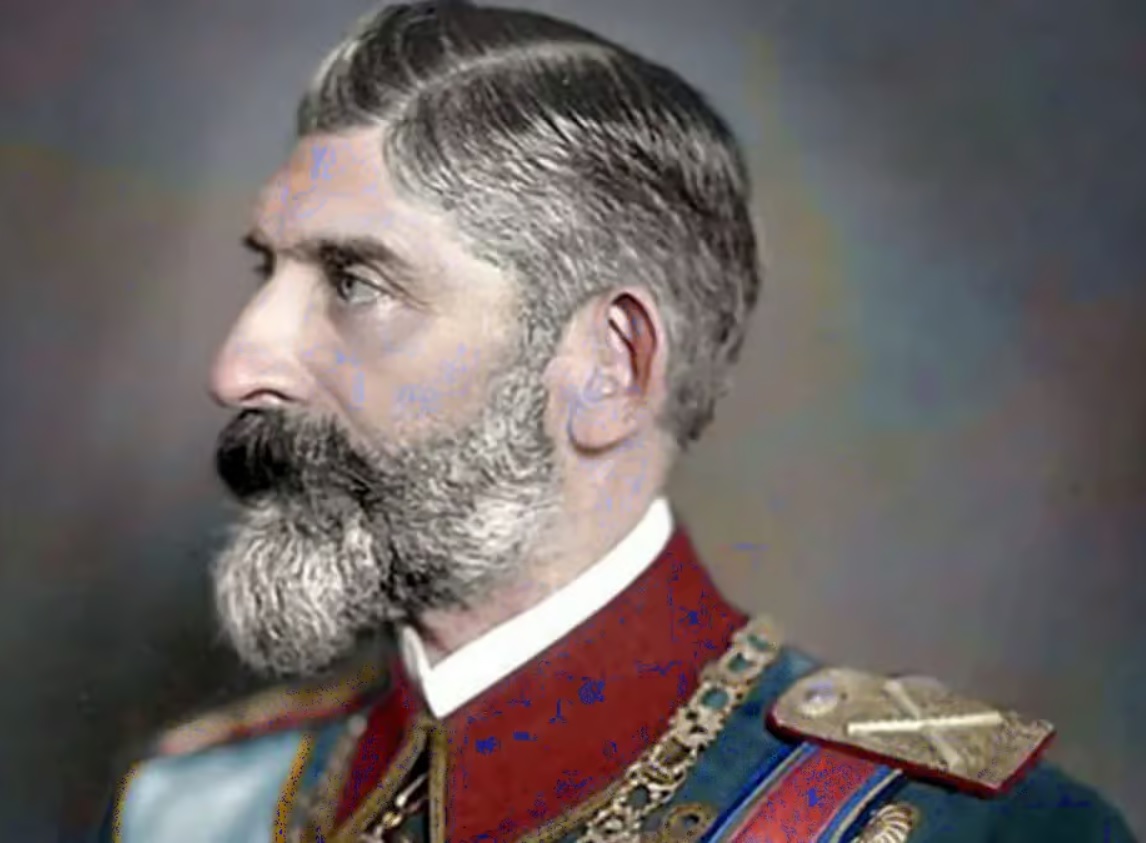
The establishment of the Politehnica in Timișoara was widely welcomed across the country. Writing in the daily newspaper Țara on 2 December 1920, Camil Petrescu stated: “The news that Timișoara would finally be endowed with the much-desired Politehnica, destined to give this capital of Banat the character of a university city, was received with profound satisfaction by all sections of our society. There can be no doubt that, through its high cultural standards, this school will do much to make Timișoara the intellectual centre we all wish it to be.”
The history of the Politehnica was written at a rapid pace. In its first year, the Politehnica School began its activities with 117 students: 89 enrolled in the first year and 28 in the preparatory year. As the School did not yet have its own premises, it initially operated with a secretariat within the City Hall, where the first student applications were submitted and reviewed. Classes began on 29 November 1920, in the premises of a primary school on Telbisz St, a building that remains part of the Politehnica’s heritage today.
During its first year, the Politehnica School was governed by a Academic Improvement Council chaired by Academician Ludovic Mrazec, Director of the Geological Institute and professor at both the Politehnica School and the University of Bucharest, delegated by the Romanian Academy. Its members were Traian Lalescu, Director (Rector) of the Politehnica School of Timișoara; Constantin C. Teodorescu, Deputy Director of the School; Constantin Răileanu, Inspector General Engineer, delegated by the Higher Technical Council; Adalbert Veith, Director General of the Reșița Metallurgical Works and Estates Company, delegated by the Ministry of Industry and Commerce; Stan Vidrighin, Director of the Timișoara Municipal Enterprise, delegated by the Ministry of Industry and Commerce; and Augustin Maior, Professor of Physics, delegated by the University of Cluj.
The academic staff consisted of Rector Traian Lalescu, who taught Mathematical Analysis; Constantin C. Teodorescu, who taught Strength of Materials and Theoretical Mechanics; Victor Vlad, who taught Descriptive Geometry; Constantin Cândea, who taught Chemistry; Augustin Coman, who taught General Mathematics; Constantin Stăncescu, who taught Physics; Gheorghe Buicliu, who taught Analytical Geometry; Augustin Kalder, who taught Drawing; Ludovic Varga; Rudolf Munk; Artur Rado; Mihai Popescu; Cerchez Manughevici; Mihai Vasiliu; and Aurel Halarevitz.
Academic consolidation and cultural development
From its earliest days, the Politehnica School of Timișoara developed strong traditions through the efforts of its talented and forward-looking academic staff. These included maintaining close and continuous links between the School and industry, fostering collaboration between academic staff and major industrial enterprises, establishing laboratories for scientific research, and combining research with practical work involving students. These traditions were maintained and further strengthened throughout the university’s history.
One year after Traian Lalescu laid the foundation stone of the institution, Rector Victor Vâlcovici noted in his opening address for the new academic year, delivered on 30 October 1921, that the School had two departments, Mining and Metallurgy and Electromechanics, attended by 269 students. That same year, the Timișoara Mathematical Journal (Revista Matematică din Timișoara) was established, the first issue of the Yearbook of the Politehnica School was published, and the “Students’ Sports Association” was founded. The association also selected Politehnica’s first football team.
Appointed Rector on 1 October 1921, Victor Vâlcovici, a close associate of Traian Lalescu, identified the steps needed to develop the School: “An institution such as a Politehnica goes through three major stages in its development. The first is the birth of the institution. It has a romantic character, particularly because of the period preceding its actual birth, a period of spiritual gestation and contact with political forces. The second, much more important in the life of the institution, is the stage from its establishment to maturity. The third is the stage of permanent operation.” In the comprehensive plan he developed for the School’s growth, he identified three priorities: constructing its own premises; assembling an academic staff equal to the institution’s mission; and organising and equipping laboratories to meet the needs of a Politehnica.
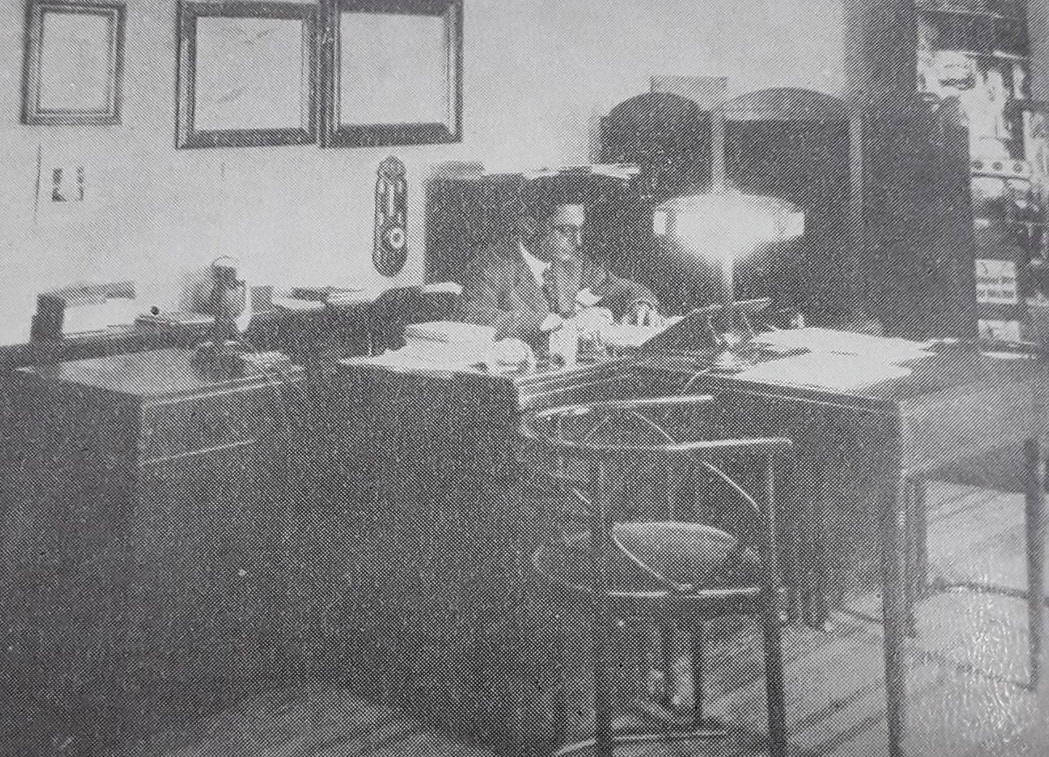
The extent of his success is evident from an article published by the newspaper Nădejdea in 1924: “On Sunday, 2 November, the Politehnica School of Timișoara, this distinguished national cultural institution of the country and of Banat, gave our country its first engineers. In educating them, the School’s academic staff gave their very best, dedicating their minds and hearts, as well as much hard work and effort, to providing society with new, distinguished and useful members. This event in itself represents a landmark, a milestone in our national, cultural and economic development.”
The scientific and cultural extension programme, initiated by Traian Lalescu and Victor Vâlcovici in the form of public lectures, was intended to broaden the students’ intellectual education. The first three lectures, delivered by Professor Victor Vâlcovici himself, focused on the theory of relativity. In the following years, some of the country’s leading intellectuals gave lectures, including Nicolae Iorga, Sextil Pușcariu, Vintilă Brătianu and I. G. Duca.
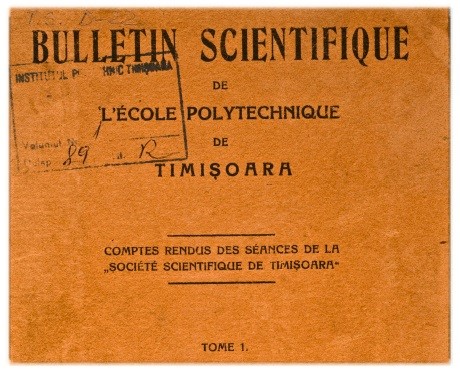
Following the establishment of the Scientific Society of the Politehnica School in 1923, the journal Bulletin Scientifique de l’Ecole Politehnique de Timișoara was launched in 1925, and the first Congress of engineers who had graduated from the Politehnica School was held in 1927.
The establishment of the Politehnica School of Timișoara made a significant contribution, as its founders had envisaged, to the economic and social development of the region. First and foremost, the Politehnica served as a centre of scientific knowledge and provided the major industrial enterprises in the area with highly qualified personnel, thereby facilitating the development of a strong, modern and competitive industrial sector.
However, documents preserved in the institution’s archives also reveal the cultural role assumed by the Politehnica School of Timișoara as a source for the dissemination of science and culture, reflecting the broader mission of any university committed to the humanities and to pure or applied science. A memorandum on the School’s activities stated: “Alongside the specialist activities that the School was to develop, it could not, in this place on the country’s border, fail to take bold steps towards promoting cultural progress on a broad scale, for the benefit of the general public.”
One of the main vehicles for popularising science during this period was the Timișoara Mathematical Journal (RMT), initiated and led by the eminent mathematicians Traian Lalescu and Valeriu Alaci. As active contributors to Banat’s cultural life, the academic staff and students of the Politehnica School of Timișoara also launched a “cultural movement in rural areas”. Traian Lalescu, the Politehnica’s first rector, established a number of school libraries, while students organised cultural gatherings in villages and communes.
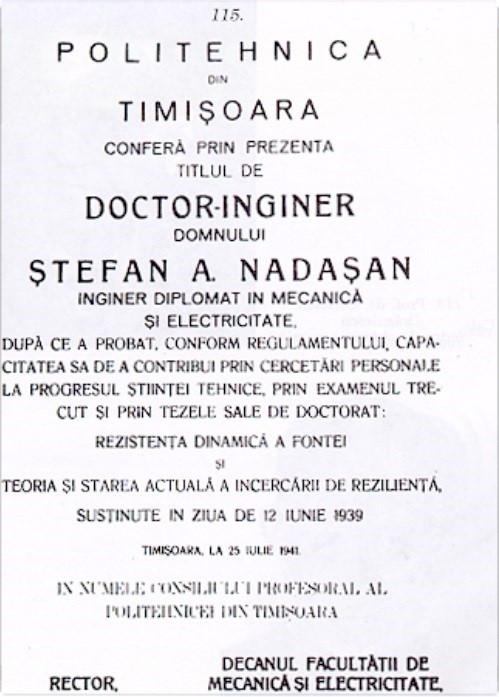
Later, on the occasion of the Politehnica’s 10th anniversary, Rector Victor Vâlcovici recalled those early years: “The Politehica was like a newborn child… almost everything was missing.” Nevertheless, the School was already on an upward trajectory. In 1933, two separate faculties were established: Electromechanics and Mining and Metallurgy. In 1937, the regulations for awarding the Doctor of Engineering degree were approved, and in 1939 the first such degree was awarded to Ștefan Nădășan.
The challenges of the interwar period were overcome primarily thanks to the exceptional quality of the Politehnica’s academic staff, the vast majority of whom had been educated at leading European universities. Figures such as Victor Vlad, Marin Bănărescu, Pompiliu Nicolau, Valeriu Alaci, Plautius Andronescu, Corneliu Mikloși, Koloman Bakony and many others brought recognition to the university in leading centres of scientific research around the world.
During the same period, the Politehnica School of Timișoara was also home to a remarkable generation of outstanding students who would later become leading figures in Romanian academia and science, including Ștefan Nădășan, Remus Basil Răduleț, Aurel Bărglăzan and others. The achievements of these leading figures of the Politehnica School of Timișoara strengthened its position and firmly established it among Romania’s enduring institutions of academic excellence.
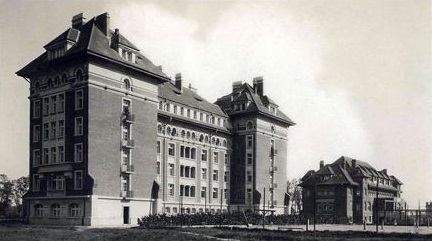
The Politehnica during wartime and its role as a university centre
The Second World War was a particularly difficult period for the Politehnica School. Its rector at the time, Plautius Andronescu, had to fight for the School’s survival, the preservation of its premises and the maintenance of decent conditions for students and professors. Despite these difficult circumstances, one of the Politehnica’s leading founders, Professor Victor Vlad, finally saw a vision he had championed for almost 20 years become a reality: the establishment of the Faculty of Civil Engineering on 11 November 1941. It is worth noting that, due to the wartime conditions, the professors of this faculty received no salary for their work during the first two years.
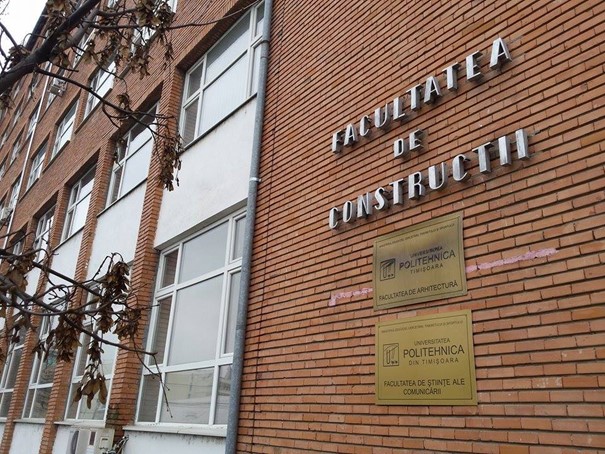
The Politehnica School of Timișoara served as a nucleus around which new faculties and higher education institutions were established. On 4 November 1938, the Academy of Higher Agronomic Sciences of Cluj was transformed into a Faculty of Agronomy under the authority of the Politehnica School of Timișoara. In 1940, it moved to Timișoara, where it operated within the Politehnica. On 30 July 1945, King Michael I of Romania promulgated Law No. 617 establishing the Faculty of Agronomy within the Politehnica School of Timișoara, where it remained until 1 September 1948, when it became an independent Agronomic Institute.
As early as 1944, a memorandum addressed to the King by the Minister of Education concerning the establishment of a university in Timișoara, which was to comprise several faculties but ultimately led only to the establishment of the Faculty of Medicine, stated: “Some departments could benefit from the hospitality of the Politehnica School of Timișoara, which is well equipped and eager to contribute to the cultural development of Banat.”
The 1948 education reform would fulfil a long-standing aspiration of the people of Timișoara: the establishment of a university. Its first institutional precursor was the Pedagogical Institute, established that year. As it did not yet have its own premises, the institute operated in Politehnica buildings until the end of 1950. The first professors of the new pedagogical institute were recruited from among the distinguished academic staff of the Polytechnic Institute, led by Prof. Dr. Doc. Mihai Ghermănescu, who also became its first director.
Another member of the Politehnica academic staff, Professor Ioan Curea, who had taken refuge in Timișoara in 1940 and established the Seismographic Station of the Polytechnic Institute of Timișoara, became the first Rector of the University of Timișoara, now the West University of Timișoara.
Even before 1948, Banat’s scientific community had begun to coalesce around figures such as Cornel Mikloși, Dan Mateescu, Remus Răduleț, Ilie Murgulescu, Coriolan Drăgulescu and Alexandru Cișman. Educated at institutions in Berlin-Charlottenburg, Karlsruhe, Göttingen, Dresden, Nancy and Versailles, among others, these professors of the Politehnica School of Timișoara went on to establish the core research groups of the Research Centre of the Academy of the Romanian People’s Republic, established on 1 September 1951.
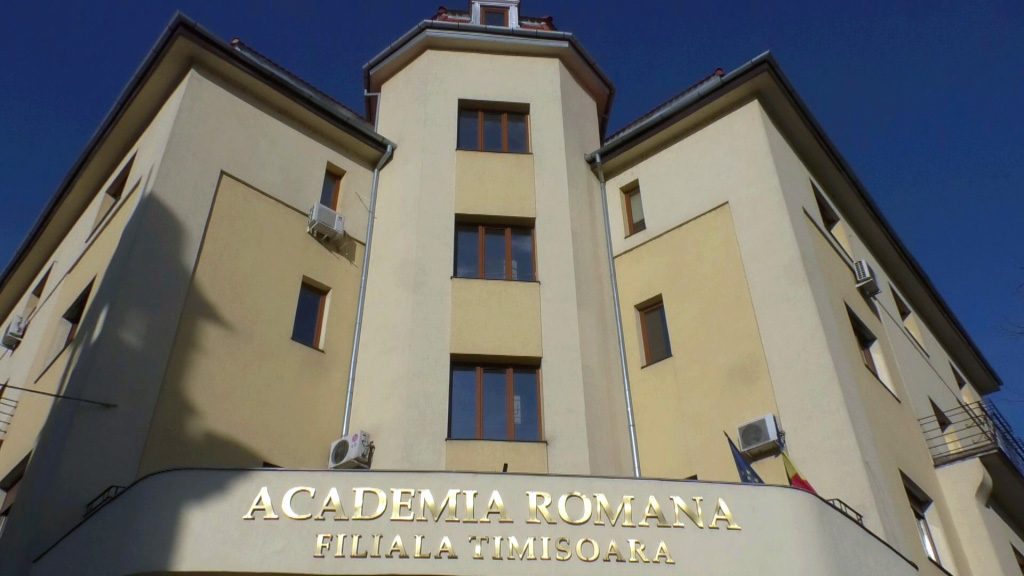
The post-war period: reforms, revolt and technological expansion
A major step in the development of the Politehnica School came in 1948, when, as part of the education reform, the Politehnica School of Timișoara became a Polytechnic Institute comprising four faculties: Mechanical Engineering, Electrical Engineering, Civil Engineering and Industrial Chemistry. These faculties had a total of 12 specialised departments, all offering full-time programmes initially lasting four years and later five years. The rapid development of the economy in general and of industry in particular led to a sharp increase in the need for specialists, as well as growing demands for increasingly advanced levels of training.
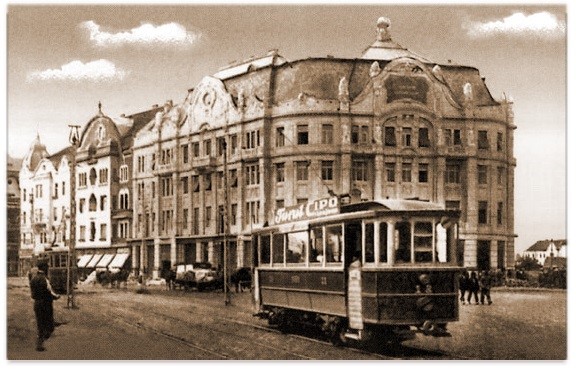
In 1949, two-year special courses were introduced alongside the Faculties of Mechanical Engineering and Electrical Engineering to “promote capable workers employed in production, whose opportunities for education and advancement had been limited by the bourgeois-landowning regime”. These courses operated until 1951, when they were replaced by the Workers’ Faculty, a two-year programme that operated for four years, until 1955, within the Polytechnic Institute of Timișoara.
To meet the growing need for specialists and provide opportunities for those already employed to pursue higher education without leaving their jobs, part-time and evening courses were introduced in the 1950–1951 academic year alongside certain faculties of higher education institutions. The programmes had a duration of six years. At the Polytechnic Institute of Timișoara, part-time courses were offered alongside the Faculty of Electrical Engineering (1952–1968), the Faculty of Mechanical Engineering (1956–1961), the Faculty of Industrial Chemistry (1955–1965) and the Faculty of Agricultural Mechanical Engineering (1962–1966).
Evening courses were introduced in 1952 at the Faculty of Electrical Engineering, in 1959 at the Faculty of Mechanical Engineering and in 1961 at the Faculty of Civil Engineering.
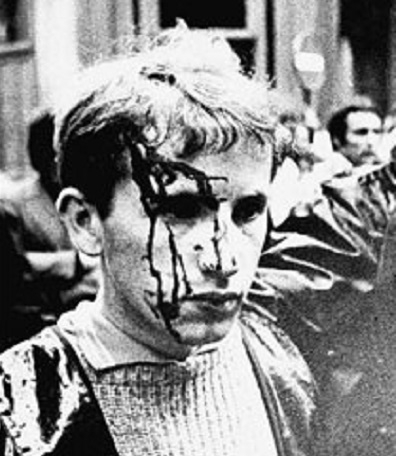
In 1956, the events in Hungary stirred sympathy among students. In Timișoara, the anti-communist student revolt, which began at the Politehnica student cafeteria, was suppressed by the Securitate, and dozens of students were imprisoned. The initiative was led by final-year students from the Faculty of Mechanical Engineering.
The development of the Polytechnic Institute continued at a rapid pace, alongside the diversification of its fields of study. Thus, in the 1953–1954 academic year, the Faculty of Rolling Stock was established, with two departments: Locomotives and Carriages. In 1962, the Faculty of Agricultural Mechanical Engineering was added following its transfer from Craiova.
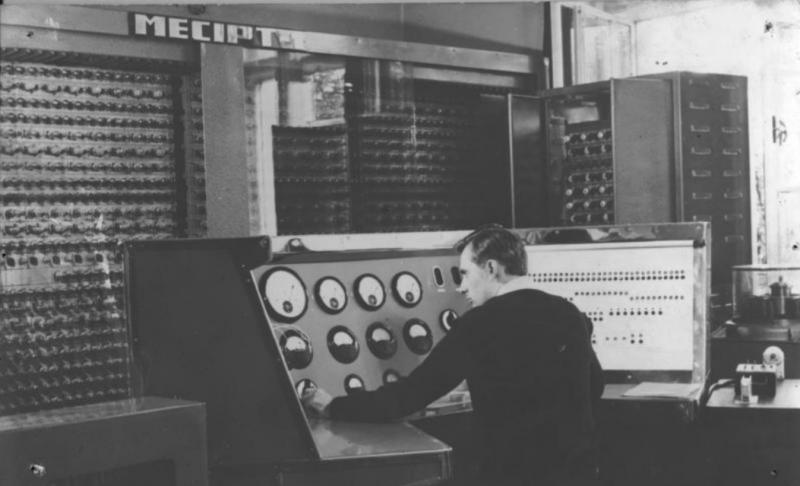
During the same period, the Computing Centre of the Polytechnic Institute of Timișoara was established in 1961, enabling the university to enter the information age at an early stage and become a pioneer in the field. That same year, MECIPT-1 (the Electronic Computing Machine of Politehnica University of Timisoara) was put into operation. It was the first alphanumeric computer in Romania and the first computer to be used in a Romanian university.
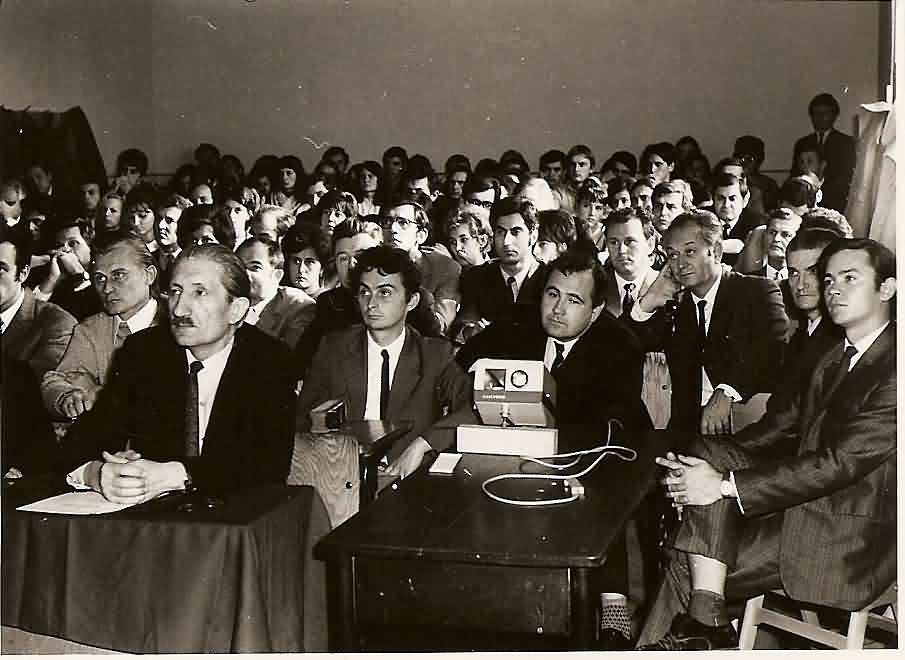
From the 1968–1969 academic year, assistant engineering programmes were established alongside the Faculties of Mechanical Engineering and Civil Engineering, followed in autumn 1969 by the Faculty of Electrical Engineering. Full-time programmes lasted 2.5 years, while evening programmes lasted 3.5 years. A more specialised form of four-year evening assistant engineering programmes was established by the "Traian Vuia" Polytechnic Institute of Timișoara in partnership with major industrial enterprises: the Iron Gates Power Plant (one cohort), Timișoara Mechanical Works and the Arad Railcar Factory. These programmes operated from 1972 to 1988.
At the university’s 50th anniversary in 1970, when its name was changed to the “Traian Vuia” Polytechnic Institute of Timișoara and its range of expertise was expanded through the establishment of assistant engineering, Electronics and Architecture programmes, the institution comprised five faculties, 24 specialised departments, 537 members of academic staff, 5,653 students and 1,318 auxiliary staff.
A decade of remarkable expansion followed. The Institutes for Assistant Engineers in Reșița and Hunedoara were established in 1971, followed by the construction of the Section for Mechanical and Electrical Prototypes and Small-Scale Production, known as SPM for short, in 1973. New buildings were constructed for the Electronic Computing Centre in 1975, the Faculty of Electrical Engineering in 1976 and the Faculty of Mechanical Engineering in 1977. Construction also began on new buildings for the Faculty of Industrial Chemistry and the Faculty of Civil Engineering, as well as the Fine Mechanics and Horology Pavilion.
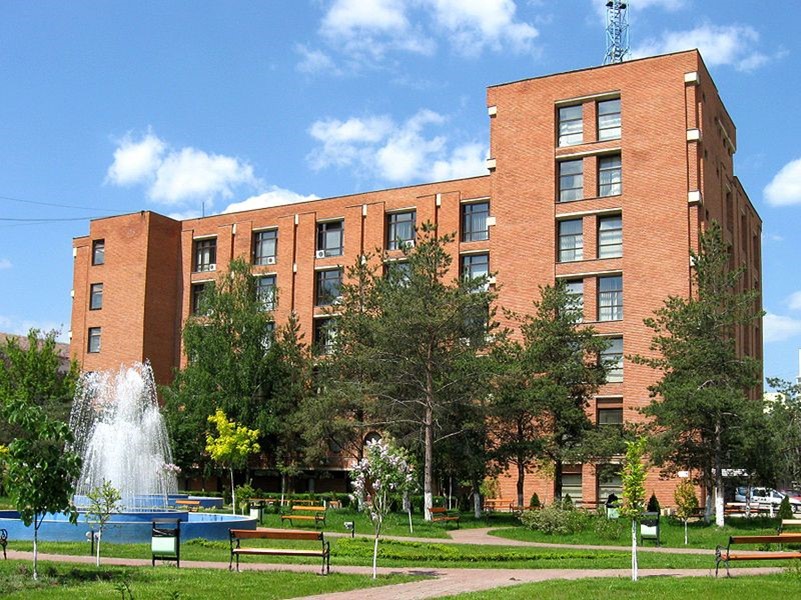
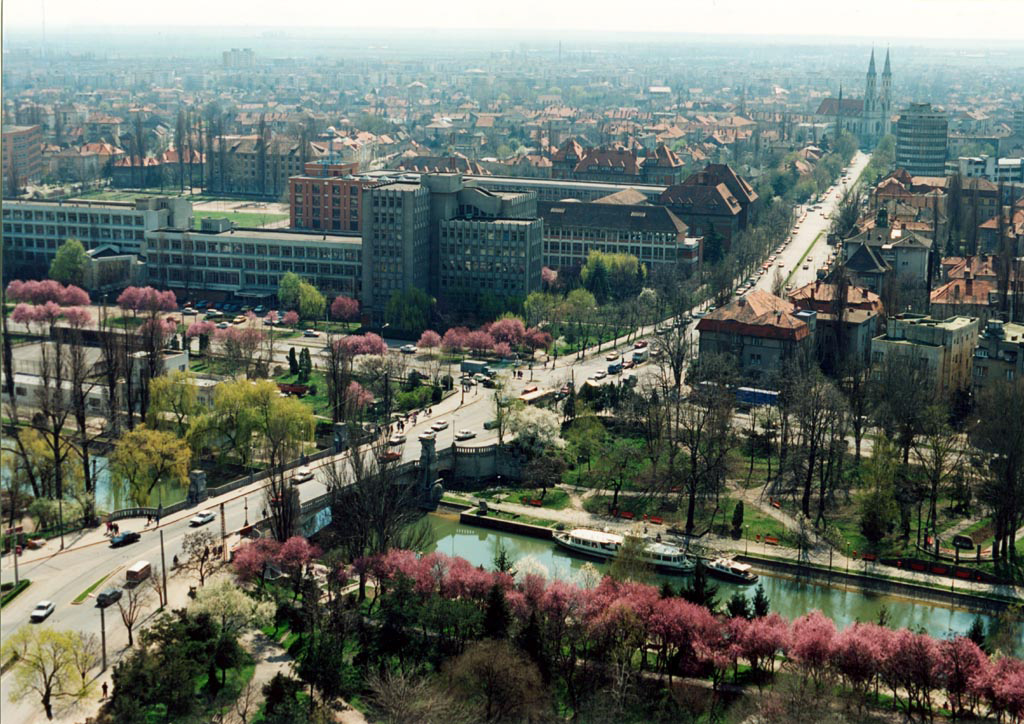
In 1980, the year of its greatest expansion, the “Traian Vuia” Polytechnic Institute of Timișoara had 15,000 students, 868 members of academic staff, 280 laboratories, 17 student halls of residence with 8,500 places, and 60,707 sqm of teaching space.
From 1980 to the present: continuous adaptation and modernisation
The final years of the communist regime, marked by austerity, economic cutbacks and a halt to investment, together with the early years of the post-1989 transition, led to a slight decline for the Politehnica. This was followed by a new period of growth, particularly after the restoration of university autonomy, the radical restructuring of degree programmes, the adoption of the University Charter, the alignment of academic practices with European standards and, subsequently, the adoption of the Bologna system.
Today, Timișoara remains the centre of Romania’s main economic development region, and this would not have been possible without the combined efforts of academic staff, who have consistently maintained high standards of educational quality, with a level of rigour that may at times have seemed excessive to their students, as well as the efforts of the Politehnica’s students and graduates, who understood the importance of thorough training in engineering. Over the years, more than 130,000 graduates have carried the spirit of the Politehnica forward and made a remarkable contribution to the development of research and the economy, not only in Romania but also abroad. An engineering education received in Timișoara has long been a respected and valued mark of distinction wherever its graduates have gone. It is therefore no coincidence that Politehnica University of Timisoara, the oldest higher education institution in western Romania, is today included among the country’s leading higher education institutions, in the category of universities for advanced education and research.
Today: a modern campus and strategic partnerships
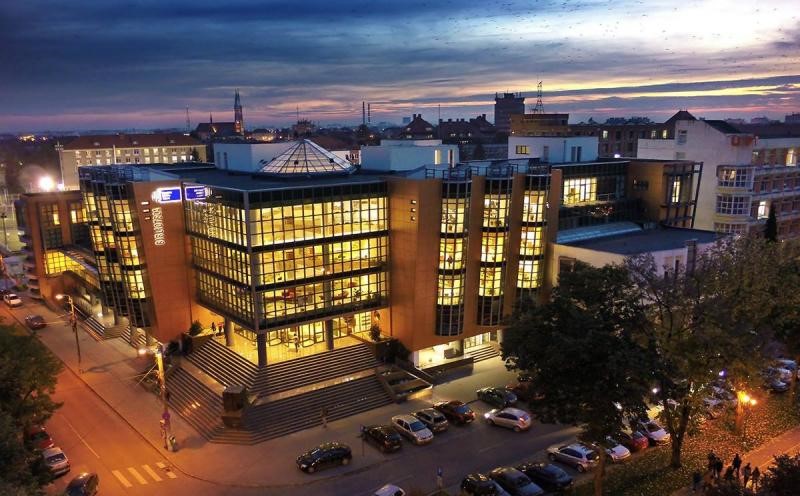
The leadership of Politehnica University of Timisoara has always been committed to providing its students with the best possible conditions. The university offers generous teaching spaces, modernised lecture theatres, dozens of state-of-the-art laboratories for research and for putting theoretical knowledge into practice, modernised student halls of residence for all its students, student cafeterias and restaurants, the most modern university library in the country, and sports facilities unmatched by any other university in Romania. All these facilities are available to students free of charge. Moreover, Politehnica University of Timisoara rewards academic achievement by offering some of the highest scholarships, funded both from public sources and its own revenue, to students who excel in their studies, research, volunteering or in representing the university at various scientific, cultural and sporting events and competitions.
The prestige enjoyed by our university is also reflected in the agreements it has concluded with nearly 400 universities around the world. These partnerships facilitate mobility programmes for bachelor’s, master’s and doctoral students and academic staff, joint research projects, participation in scientific events, and the completion of jointly supervised doctoral degrees.
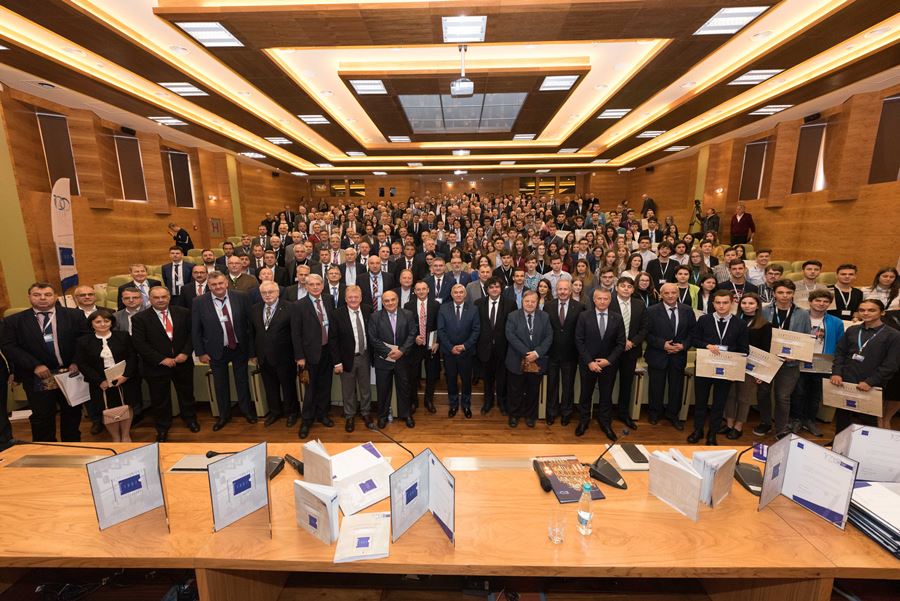
Politehnica University of Timisoara has more than 200 economic partners with which it has collaboration agreements. As a result, graduates transition into employment quickly, with employment rates close to the maximum possible. Major companies in Timișoara and beyond have established and continue to develop partnerships with the Politehnica, supporting teaching activities, on the one hand by setting up laboratories and, on the other, by helping adapt degree programmes to the changing realities of the labour market. In this context, the Steering Committee of Politehnica University of Timisoara was established in 2012 to advise the university leadership on measures for reforming degree programmes.
Looking to the future
What does the future hold for our School? Is it prepared to respond to the changes brought about by an increasingly complex and uncertain society, one that will focus ever more on the individual and their increasingly diverse and multifaceted needs? Will our Politehnica succeed in embracing a broad and diverse educational mission, maintaining its comprehensive character in a world of physical and virtual mobility, where individuals are becoming increasingly individualised? In fact, the future begins today. With hope, confidence and the belief that the Politehnica School of Timișoara will always live up to the standards set by those who founded it and carried it forward to the prestige it enjoys today.