
Timeline
Introduction
The transformation of Timișoara into a university city directly contributed to its growth and increased its attractiveness for all types of investment, while preserving its young and innovative spirit and promoting its image as a leading centre of Romanian and European science. Over time, the technical solutions developed by the Politehnica School were recognised and adopted in major development projects across Romania, from the construction of the Iron Gates Hydroelectric Power Station to the Danube–Black Sea Canal, from the structural calculations for the RomExpo building to major industrial complexes across the country. Tens of thousands of Politehnica graduates contributed to the industrialisation and modernisation of Romania.
The 1920s: Founding and early achievements
1920
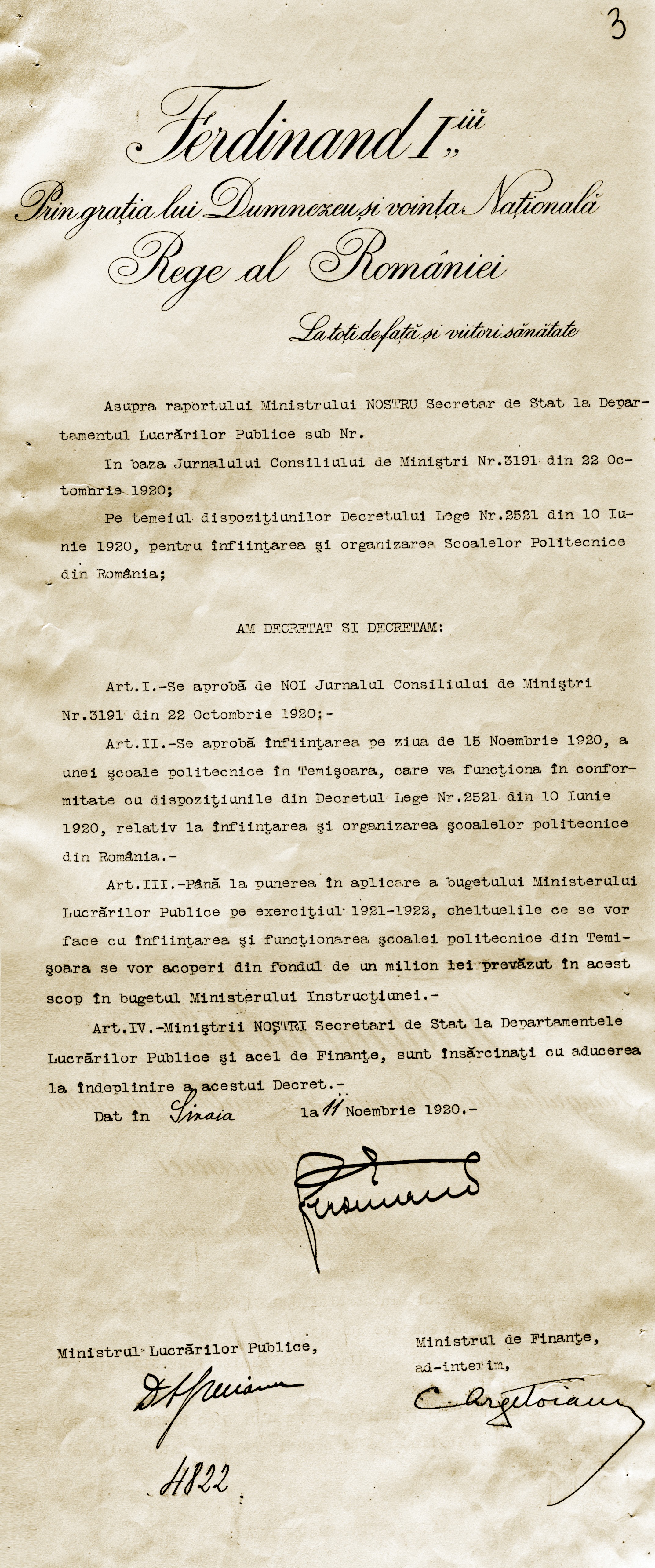
- On 11 November 1920, King Ferdinand signed the Decree-Law establishing the “Politehnica School” in Timișoara, effective from 15 November 1920. The school’s first rector was Traian Lalescu.
- In its first year, the Politehnica School began its activities with 117 students: 89 enrolled in the first year and 28 in the preparatory year. Classes began on 29 November 1920, in the premises of a primary school on Telbisz St, a building that is still part of the university’s heritage today. The academic staff consisted of Rector Traian Lalescu (who taught Mathematical Analysis), Constantin C. Teodorescu (Strength of Materials and Theoretical Mechanics), Victor Vlad (Descriptive Geometry), Constantin Cândea (Chemistry) and Augustin Coman (General Mathematics).
- A hall of residence with 48 beds was provided for students at Telbisz St, No. 6, together with a cafeteria housed in the Regatta sports club building.
1921
- One year after Traian Lalescu laid the foundation stone of the institution, Rector Victor Vâlcovici noted in his opening address for the new academic year, delivered on 30 October 1921, that the school had two departments: Mining and Metallurgy, and Electromechanics. They were attended by 269 students. Later that year, the Timișoara Mathematical Journal (Revista Matematică din Timișoara) was established, the first issue of the Yearbook of the Politehnica School was published, and the "Students’ Sports Association" was founded. The association also selected Politehnica’s first football team.
- Appointed rector on 1 October 1921, Victor Vâlcovici, a close associate of Traian Lalescu, set out a clear plan for the school’s development. His priorities included building dedicated premises, assembling an academic staff capable of fulfilling the institution’s mission, and establishing and equipping laboratories to meet the needs of a polytechnic school.
- The first series of public lectures on science and general culture was organised.
- The “Students’ Society of the Timișoara Politehnica School” was established.
1922
- Professor Marin Bănărescu introduced Romania’s first course in Thermal Machines, laying the foundations for the Romanian school of this discipline.
1923
- The Scientific Society of the Politehnica School of Timișoara was established.
- On 11 November, the “Mechanical Pavilion”, the first building owned by the Politehnica School, was inaugurated on Mihai Viteazu Blvd in the presence of King Ferdinand. Designed by architect Duiliu Marcu, the building had a total area of 1,016 sqm and comprised three floors, an amphitheatre, two lecture rooms, two drawing rooms, 15 laboratories, three museums, nine offices and a workshop. During the inauguration ceremony, King Ferdinand delivered the words that would later become the Politehnica’s motto: “It is not the walls that make a school, but the spirit that reigns within it.”
- Three villas providing accommodation for academic staff were completed on the land allocated to the Politehnica School.
1924
- The first graduating class of the Politehnica School of Timișoara received their engineering degrees.
1925
- The first issue of the “Bulletin Scientifique de l’Ecole Politehnique de Timisoara” was published.
- Professor Plautius Andronescu introduced Romania’s first modern course in Electrical Engineering based on a vector approach.
- Professor Pompiliu Nicolau began construction of the Electrical Machines Laboratory.
1926
- Professor Corneliu Mikloși delivered the first course in metallography in Romania, entitled “Elements of Mechanical Technology and Industrial Alloys”.
1927
- The first Congress of engineers who graduated from the Politehnica School was held.
- The institution’s first student hall of residence was opened, with 220 beds.
- Professor Plautius Andronescu inaugurated Romania’s first high-voltage laboratory, paving the way for major advances in Romanian engineering.
1928
- Professor Plautius Andronescu delivered Romania’s first course in Electrostatics.
- Professor Ștefan Nădășan, founder of the Romanian School of Strength of Materials, published the first book on strength of materials in Romania.
- Professor Pompiliu Nicolau established the first Hydraulics and Hydraulic Machines Laboratory.
- Aurel Bărglăzan, in collaboration with Octavian Smigelschi, completed a graduation thesis entitled “Study of a Cernavodă–Constanța navigable canal”. The proposed route closely followed that of the present-day Danube–Black Sea Canal.
1929
- The Chemistry Society was established at the Politehnica School of Timișoara. In 1933, it organised the 4th National Congress of Chemistry, which brought together participants from Romania and abroad.
The 1920s: Founding and early achievements4 fotografii
The 1930s: Academic expansion and the first specialisations
1930
- The building housing the Politehnica student cafeteria was completed and opened. Located next to the student hall of residence, it could accommodate 450 students.
1931
- King Carol II, accompanied by Prime Minister Nicolae Iorga, visited the laboratories, student hall of residence and student cafeteria of the Politehnica School of Timișoara. They were welcomed by Rector Victor Blașian.
- The Politehnica School of Timișoara was granted university autonomy under a special law promulgated in July. The law established that higher education was fully autonomous in matters including the organisation of studies, governance through the rector, Senate, dean and councils, and financial management.
- Another law, promulgated in August, granted the Politehnica School of Timișoara legal personality and exempted it from all taxes, duties and stamp duties.
1932
- Professor Plautius Andronescu took part in the International Electricity Congress in Paris, where he presented an original paper entitled “A Unified Representation of the Operation of Electrical Machines”. The paper attracted considerable attention.
- Prof. Dr. Eng. Aurel Bărglăzan published his renowned Course in Hydraulic Machines, which was widely studied by students. It was the first course of its kind in Romania. The Romanian school of hydraulics and hydrotechnics emerged and developed in Timișoara through teaching and research carried out in its lecture rooms and specialised laboratory.
1933
- Two separate faculties were established: Electromechanics, and Mining and Metallurgy.
- A military training section was established within the Politehnica School, comprising an artillery battery and an engineer platoon.
1934
- The Association of Mathematics Teachers was established.
1935
- The Politehnica School was granted the right to award the Doctor of Engineering degree.
1936
- Professor Ștefan Nădășan represented Romania, on behalf of the Romanian Association for Materials Testing, on the International Committee for the Study of Cast Iron in Zurich. There, he presented a paper entitled “The Influence of Specimen Position in Cast Iron Testing”.
- Prof. Dr. Eng. Corneliu Mikloși, a member of the Politehnica academic staff, director of the tramway company and of the city’s hydroelectric and thermal power plants, and an initiator of the "Muntele Mic" mountain resort, also directed documentary films. In 1936, he directed five productions: Moara Prohasca Timișoara, Societatea Tramvaielor Timișoara, Muntele Mic, O zi la Caransebeș and Poiana Mărului.
1937
- The “Politehnica” sports complex was opened.
- On 19 June, at the initiative of Politehnica professors Corneliu Mikloși, Ștefan Nădășan, Remus Răduleț and Constantin Teodorescu, the Welding Promotion Circle was established. It was the first centre of its kind in Romania and operated until 1945. Its activities focused on advancing knowledge of welding techniques through theoretical and practical research, intensive courses, the publication of specialised treatises, lectures in various cities, and collaboration with interested institutes and factories.
- The Professional Development Council of the Politehnica School approved the Regulations for awarding the Doctor of Engineering degree. The main requirement for candidates was the submission of an original and valuable scientific work, prepared under the supervision of the appointed professor and related to one of the fields of technical education.
1938
- Sudura, the first specialised journal in Romanian technical and scientific literature, was published quarterly from 1938 to 1945, with a circulation of 650 copies. It featured scientific studies by members of the Welding Promotion Circle, translations of significant international works and information about the Circle’s activities.
- Prof. Dr. Eng. Corneliu Mikloși developed the TAURUS installation, the world’s first machine for welding railway and tram rails. Butt welding of rails made it possible to create continuous tracks without joints. This innovation introduced welded railways for both trains and trams in Romania.
- The “Academy of Higher Agronomic Sciences of Cluj” was transformed into a faculty and placed under the authority of the Politehnica School of Timișoara until 1945.
- The Politehnica School acquired another building, now known as “Casa Politehnicii No. 1”.
1939
- Professor Ștefan Nădășan was awarded the first Doctor of Engineering degree.
- Prof. Dr. Valeriu Alaci, the author of numerous studies and works in mathematics, particularly geometry, algebra and trigonometry, published his main work, Quadratic Trigonometry. The work laid the foundations for a new branch of mathematics and was awarded a prize by the Romanian Academy.
The 1930s: Academic expansion and the first specialisations8 fotografii
The 1940s: Wartime challenges and communist reorganisation
1940
- Prof. Dr. Eng. Marin Bănărescu’s work on modernising industrial technologies led to a patent in 1940 entitled “Machine with Pistons and Annular Working Chambers”. Its widespread industrial application brought significant improvements in the efficiency and cost of internal combustion engines, including a much more compact design, reduced wear and increased mechanical efficiency.
1941
- The Second World War was an extremely difficult period for the Politehnica School. Its rector at the time, Plautius Andronescu, worked to ensure the school’s survival, protect its buildings and maintain decent conditions for students and professors.
- Despite the challenges of wartime, one of the major projects championed for almost 20 years by Professor Victor Vlad, one of the Politehnica’s founding figures, finally became a reality. The Faculty of Civil Engineering was established on 11 November 1941. Due to the wartime conditions, however, its professors received no salary for their work during the first two years.
1942
- Prof. Dr. Eng. Remus Răduleț’s work Electric Motors was a landmark in Romanian technical literature. It was based on his research into the theory and practice of electromagnetism, relativistic electrodynamics and the theory of primitive physical quantities.
- The Politehnica School of Timișoara awarded its first Doctor Honoris Causa title to Professor Dr. Friedrich Hofmann of the Technical University of Breslau, the inventor of synthetic rubber.
- Professor Aurel Bărglăzan also conducted research into the operating principles of centrifugal pumps. In 1942, he designed and built a centrifugal pump in Reșița. Known to workers as the “Bărglăzan pump”, it was the first centrifugal pump of its kind to operate in Romania. Industrial production of centrifugal pumps subsequently adopted the Bărglăzan principle.
1943
- Professor and seismologist Ioan Curea founded the specialised journal Bulletin seismique de la station de Timisoara within the seismographic station of the Polytechnic Institute of Timișoara.
1944
- Professor and engineer Marin Bănărescu’s strong organisational skills, measured judgement and balanced approach led to his appointment as rector of the Politehnica School of Timișoara during the particularly difficult period from 1944 to 1946.
1945
- The Politehnica celebrated its 25th anniversary.
- The Faculty of Agronomy was established and remained part of the Politehnica School until 1948.
1946
- Corneliu Mikloși began designing the first high-capacity tramcars in Romania, built on Pullman-type bogies. The Gb 2/2 tramcars were the first of their kind in Romania. They were 13.20 m long, 2.24 m wide and 3.12 m high. Their load-bearing metal bodies were fully welded, while the 1.435 m track gauge allowed them to reach speeds of up to 50 km/h.
1947
- The Politehnica Library moved from Telbisz St to the complex of the former Piarist Lyceum.
1948
- The Politehnica School changed its name to the “Polytechnic Institute of Timișoara”.
- The Faculty of Mining and Metallurgy became independent from the Polytechnic Institute of Timișoara.
- The Polytechnic Institute of Timișoara comprised four faculties: Mechanical Engineering, Electrical Engineering, Civil Engineering and Chemistry, with 12 specialised departments.
- The Bulletin de Science et Technique de Politechnique de Timisoara was published. In 1949, its name was changed to Buletinul de știință și Tehnică al Institutului Politehnic din Timișoara.
1949
- The Polytechnic Institute of Timișoara acquired the former Regatta sports club building, which became home to the Hydrotechnics Laboratory.
The 1940s: Wartime challenges and communist reorganisation6 fotografii
The 1950s: Expansion of educational programmes
1950
- Within the Department of Computing, Electronics and Automation, under the direction of Professor Alexandru Rogojan, a long-distance telephone conference system was developed. It was the first of its kind in Romania.
1951
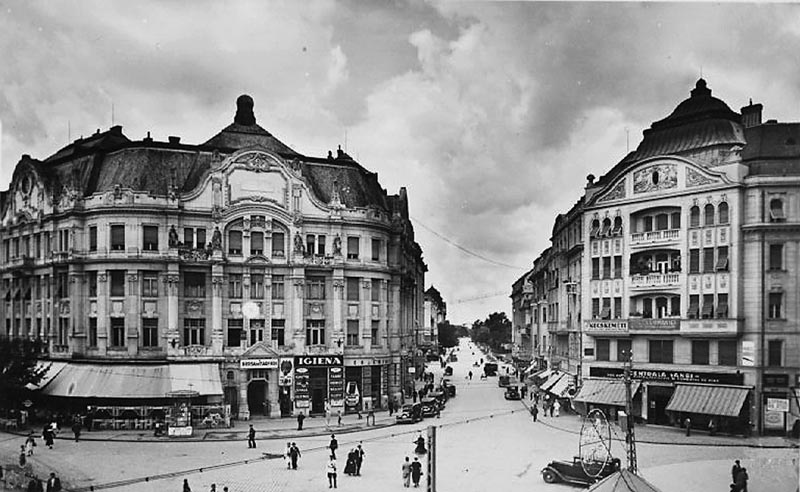
- The building at No. 2 Piața Victoriei, formerly known as Lloyd Palace, was assigned to the university. It became the headquarters of the Rectorate and housed the laboratories of the Faculty of Industrial Chemistry.
- The Workers’ Faculty was established within the Polytechnic Institute of Timișoara. The two-year programme operated from 1951 to 1955.
1952
- In response to the growing need for specialists and to provide employed people with opportunities for higher education, part-time and evening courses were introduced at several faculties. The programmes had a duration of six years.
- The building at No. 3 Lucian Blaga St was assigned to the Faculty of Industrial Chemistry. It later became the headquarters of S.C. “METROPOL” S.A.
1953
- The Faculty of Rolling Stock was established and became a department within the Faculty of Mechanical Engineering in 1954.
- Two buildings, measuring 180 sqm and 80 sqm respectively, were constructed in the courtyard of the Faculty of Mechanical Engineering to house the laboratories of the Rolling Stock Department.
1954
- The Internal Combustion Engines Laboratory building, located within the Faculty of Mechanical Engineering on Mihai Viteazu Blvd, was completed and opened.
- The need to introduce modern teaching and seminar methods, including film and video, led to the establishment of a film production laboratory. Dozens of educational films were produced there, along with more than 20,000 photographs, 3,000 slides and 20,000 pages of microfilm each year.
1955
- A new two-storey laboratory building was constructed and equipped with machines and equipment for practical work in machine tools and heat treatment.
1956
- The events in Hungary sparked sympathy among students. In Timișoara, an anti-communist student protest that began at the Politehnica student cafeteria was suppressed by the Securitate, and dozens of students were imprisoned. The initiative was led by final-year students from the Faculty of Mechanical Engineering.
- The duration of full-time degree programmes was reduced to five years.
- Towards the end of 1956, construction began in Timișoara on new buildings belonging to the Polytechnic Institute.
1957
- The Machine Building Technology department was established within the Faculty of Mechanical Engineering.
1958
- The whole of Timișoara celebrated on 6 July after Știința Timișoara won the Romanian Football Cup for the first time, defeating Progresul București 1–0 with a goal scored by Petre Cădariu.
- A new five-storey student hall of residence with 324 beds was built on the Mihai Viteazu Blvd campus.
- A building at Porumbescu St, No. 38 was assigned to the Politehnica for mechanical technology laboratories.
1959
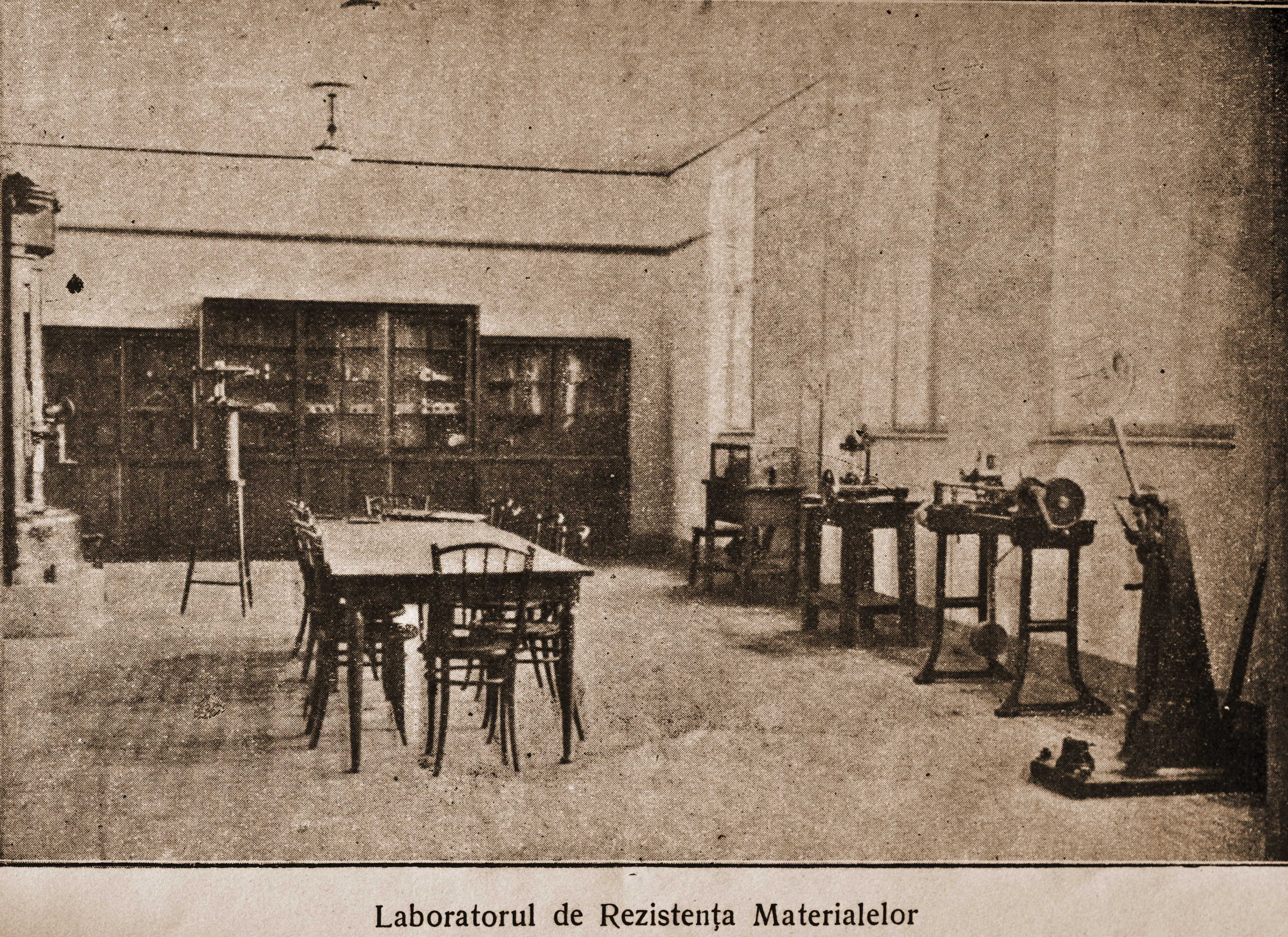
- A new building for the Strength of Materials Laboratory was constructed within the Faculty of Mechanical Engineering on Mihai Viteazu Blvd.
The 1950s: Expansion of educational programmes7 fotografii
The 1960s: The MECIPT era
1960
- The Hunedoara Institute for Sub-Engineers was established, becoming the predecessor of today’s Faculty of Engineering in Hunedoara.
- The Steel Structures Laboratory was built at Ioan Curea St, No. 1.
1961
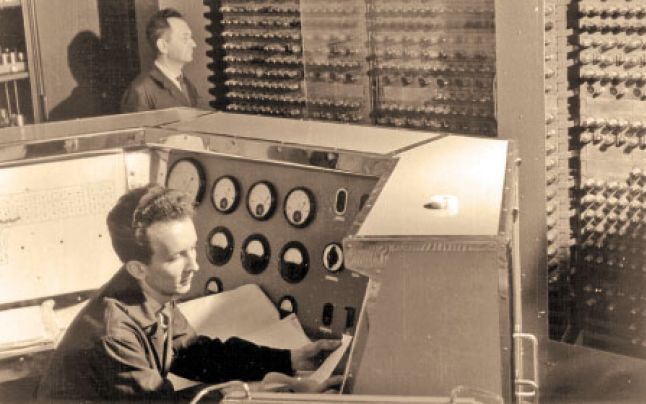
- MECIPT-1, the first alphanumeric computer in Romania and the first computer used in a Romanian university, was put into operation.
- The Computing Centre was established.
1962
- Construction began in the Student Complex on student halls of residence 1C, 2C, 8C, 9C, 11C and 15C, as well as student cafeterias 1C and 2C. The buildings were completed in 1968.
- The Faculty of Agricultural Mechanical Engineering was transferred from Craiova to Timișoara and was housed in the building at Remus St, No. 14.
1963
- A new eight-storey building at Republicii Blvd, No. 9 was completed. It became the new home of the Faculty of Civil Engineering and, later, in 1970, the Architecture department.
1964
- Construction of the Reinforced Concrete Department building at Traian Lalescu St, No. 2A was completed. The building was expanded with a new wing in 1968.
- The Hydraulic Turbines Laboratory was put into operation within the Faculty of Mechanical Engineering.
- The Macromolecular Compounds Technology specialisation was established within the Faculty of Chemistry.
1965
- Professor Alexandru Rogojan established Romania’s first university department specialising in digital computers at the Polytechnic Institute of Timișoara.
- MECIPT-2, a second-generation computer using transistors and magnetic-core memory, was put into operation.
- The Reproduction Centre of the Polytechnic Institute of Timișoara was established.
1966
- Romania’s first academic department specialising in computing was established within the Faculty of Electrical Engineering.
- The first generation of Romanian engineers specialising in electronic computers completed their studies in the Electromechanics department of the Faculty of Electrical Engineering.
- The Ministry of Education approved the establishment of Romania’s first Electronic Computers department at the Politehnica School of Timișoara. An admission competition was organised that same year for 20 places. The number of places was increased to 50 the following year.
1967
- The “Electrical Engineering and Computers” department became the “Computers, Electronics and Automation” department.
- A decree was issued establishing the Institute for Computing Technology (ITC). Its Timișoara branch was staffed by the team that had developed and operated MECIPT-1, the first computer used in a Romanian university.
1968
- Sub-engineering programmes were established within the Faculties of Mechanical Engineering and Civil Engineering.
- The Geotechnical Engineering and Land Transport Infrastructure department was established.
1969
- Sub-engineering programmes were established within the Faculty of Electrical Engineering.
- The Hydrotechnical Construction Laboratory was built.
The 1960s: The MECIPT era23 fotografii
The 1970s: The 50th anniversary and new directions for development
1970
- The institute celebrated its 50th anniversary. On this occasion, it was granted the right to bear the name “Traian Vuia” Polytechnic Institute of Timișoara. The institute comprised five faculties, with 24 specialisations for engineers and sub-engineers, 537 members of academic staff and 5,653 students.
- The Architecture department was established within the Faculty of Civil Engineering, as was the Applied Electronics department within the Faculty of Electrical Engineering.
- A new modern wing was added to the Faculty of Mechanical Engineering building, providing two amphitheatres, two lecture rooms and laboratories.
1971
- Construction of the Roads and Bridges Department building at Ioan Curea St, No. 1A was completed.
1972
- Evening sub-engineering programmes were established at the Porțile de Fier Power Plant, Timișoara Mechanical Works and Arad Railcar Factory, under the authority of the Politehnica Institute of Timișoara. Teaching was delivered with the support of staff from the Machine Building Technology Department.
- Construction began on the training workshop at the Mihai Viteazu Blvd site. The facility was expanded in 1983.
1973
- The Electrical and Mechanical Prototyping and Small-Scale Production Department, known as SPM, became operational.
1974
- The Institutes for Sub-Engineers in Hunedoara and Reșița were established under the authority of the Polytechnic Institute of Timișoara, in accordance with Official Bulletin No. 81/1974.
- The training workshop of the Faculty of Civil Engineering was built.
1975
- The Institute’s Electronic Computing Centre was established.
1976
- The new Faculty of Electrical Engineering building on Vasile Pârvan Blvd was opened, with a total floor area of 21,350 sqm.
- A pioneering joint research project in solar energy between Politehnica University of Timisoara and the Ceramic Products Factory in Jimbolia resulted in a fully operational industrial facility. It was Romania’s first industrial application of solar energy technology and involved the construction of a hall for drying ceramic products.
1977
- The Land Improvement Laboratory was built at Ghirodei St No. 32, in the Pădurea Verde area.
1978
- The new wing of the Faculty of Mechanical Engineering was strengthened following the 1977 earthquake and an additional storey was added.
- Student halls of residence 19–22 were built in the Student Complex.
1979
- A new laboratory was established within the Faculty of Hydrotechnics.
The 1970s: The 50th anniversary and new directions for development17 fotografii
The 1980s: Campus consolidation and a changing context
1980
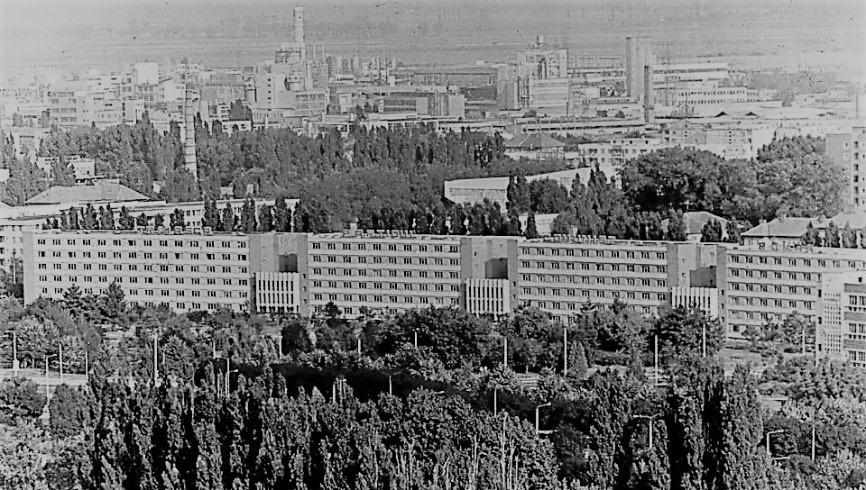
- In 1980, the year of its greatest expansion, the “Traian Vuia” Polytechnic Institute of Timișoara had 15,000 students, 868 members of academic staff and 280 laboratories. It also had 17 student halls of residence, providing 8,500 places at increased room occupancy, and 60,707 sqm of teaching space.
- The Politehnica studio flats and Student Complex Cafeteria 4 were built.
1981
- Coleta De Sabata became the first woman rector in the history of the Timișoara Politehnica and the second woman rector in Romania.
- The new building of the Faculty of Civil Engineering and the Clockmaking Pavilion of the Faculty of Mechanical Engineering were opened.
- An experimental industrial plant for preheating bitumen using solar energy was commissioned in Săcălaz, Timiș County.
1982
- The first Romanian industrial robot, REMT-1, developed by the “Traian Vuia” Polytechnic Institute and Electromotor Timișoara, was put into operation.
- Construction of the new building of the Faculty of Chemical Technology on Vasile Pârvan Blvd was completed.
- The Small-Scale Production Department underwent significant expansion.
1983
- Rector Coleta De Sabata decided to organise an exhibition featuring portraits of the 16 rectors who had led the Politehnica up to that point. The portraits were painted voluntarily by artist Judith Nagy.
1984
- The 4th National Symposium on “Robotisation in Industry” was held at the “Traian Vuia” Polytechnic Institute of Timișoara.
1985
- Following the suspension of promotion and recruitment competitions in higher education, the student-to-academic staff ratio reached 17.5 to 1. Academic staff were teaching between 15 and 30 hours per week, which affected the quality of education.
- The annual production target imposed on the “Traian Vuia” Polytechnic Institute was 22 million lei.
1986
- The Politehnica Timișoara handball team won the Romanian Cup for the first time.
- The treatise Vibropercussive Systems, authored by Gheorghe Silaș and Liviu Brîndeu, received the “Traian Vuia” Prize of the Romanian Academy.
- Academician Ion Boldea and his team developed the first MAGLEV-Magnibus-01 with integrated magnetic propulsion and levitation and a passive track. A 4-tonne prototype was tested on a 150-metre-long track at UPT.
1987
- A large interdisciplinary research team was established to study methods for maintaining water quality through a wide range of wastewater treatment technologies.
1988
- Evening education was expanded excessively, accounting for 45% of the institute’s educational provision.
1989
- At the beginning of the academic year, the “Traian Vuia” Polytechnic Institute had 75 buildings with a total area of 215,293 sqm. Its facilities included 62 lecture rooms, 146 seminar and project rooms, 227 laboratories, 19 student halls of residence, four student cafeterias and three sports complexes.
- The institute comprised the following faculties: Mechanical Engineering, with seven departments; Electrical Engineering, with six departments; Civil Engineering, with four departments; Chemical Technology, with three departments; Agricultural Mechanical Engineering, with three departments; the Institute for Sub-Engineers in Reșița, with one department; and the Institute for Sub-Engineers in Hunedoara, with one department.
The 1980s: Campus consolidation and a changing context7 fotografii
The 1990s: Reorganisation and a return to tradition
1990
- Following the 1989 Revolution, Radu Vlădea was elected the first rector of the post-communist period. At the time, he was the youngest rector in Romania.
- The Faculties of Automation and Computers and Electronics and Telecommunications were established by transforming existing departments within the Faculty of Electrical Engineering.
1991
- The "Traian Vuia" Polytechnic Institute of Timișoara was renamed the “Technical University of Timișoara”.
- The university’s fields of study and specialisations were reorganised into eight faculties in Timișoara and one in Hunedoara.
- The Department of Foreign Languages was established.
- Professor Radu Băncilă introduced civil engineering studies in German, the first non-German Studies degree programme in Romania to be taught in German.
- "Casa Politehnicii No. 2" (Politehnica House 2), located on Mihai Eminescu Blvd and formerly known as the “Party Hotel”, was acquired by the Politehnica University of Timisoara in 1991 and converted into accommodation and restaurant facilities for university guests and delegations. The building was constructed in 1968 based on a design by architect Haralambie Cocheci.
1992
- During Alexandru Nichici’s term as rector, the university began redesigning its degree programmes to bring them into line with those offered by leading universities in Europe and around the world.
1993
- The first version of the University Charter was drafted and approved by the Senate.
1994
- Teleuniversitatea TV was established within the Politehnica, becoming the first student television station in Romania.
- The first edition of the ISWinT student festival was held. Organised by Liga AC (then LSFCAT), the festival brought students from around the world to Timișoara.
1995
- The Technical University of Timișoara was renamed the Politehnica University of Timisoara.
1996
- The decision was taken to dissolve the Faculty of Agricultural Mechanical Engineering and establish the Faculty of Management in Production and Transportation.
- Politehnica Press was established.
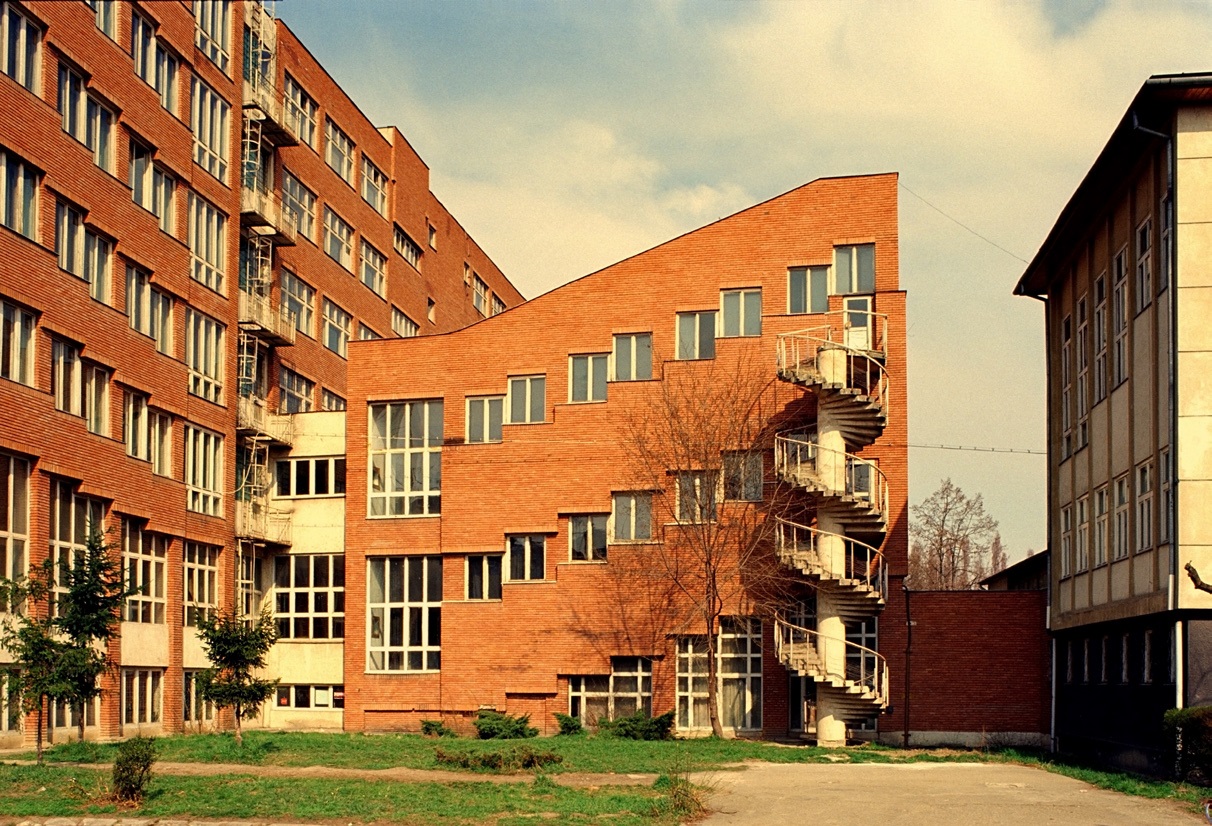
- The Faculty of Hydrotechnics, housed in the former “Regatta” nautical club acquired by the Politehnica School in 1949, was expanded between 1994 and 1996.
1997
- The university had 10 affiliations with international organisations, 30 inter-university cooperation agreements, 22 TEMPUS projects, three research projects under the European Copernicus programme and two Phare projects, involving more than 300 mobility opportunities.
- The Senate adopted new Regulations on scientific research, placing emphasis on integrity, competition and incentives.
- The Building Services Engineering Department was established.
1998
- The Distance Learning Centre was established, initially offering specialisations in Audio-Video and Multimedia Technologies and Applied Computer Science.
- A transferable study credit system was introduced for all students except those in their final years, marking a pioneering step in Romanian higher education.
1999
- Major renovation works were completed at Sports Complex 2, including the construction of a multifunctional leisure facility.
- The Kathrein Institute was established at the Politehnica University of Timisoara in collaboration with the German company Kathrein.
The 1990s: Reorganisation and a return to tradition10 fotografii
The 2000s: Modernisation and academic diversification
2000
- The Department for Continuing Education was established.
- The Department of Mathematics was established as an independent structure under the authority of the Rector’s Office.
2001
- The “Embedded Systems” advanced studies programme, later transformed into a master’s degree programme, was introduced in collaboration with Siemens VDO Automotive Romania.
2002
- The Department for Teacher Training was established.
2003
- UPT became the first university in Romania to introduce a computerised student administration system.
2004
- The Department of Communication and Foreign Languages was established.
- The UBIT Business Incubator was established through a partnership with Timișoara City Council, Timiș County Council and IBD-GTZ.
2005
- Degree programmes began to be organised under the Bologna system.
- The Faculty of Architecture was established through the reorganisation of the Department of Architecture within the Faculty of Civil Engineering and Architecture.
- Student Cafeteria No. 1 was renovated and refitted.
- The Technology Transfer Centre was established.
- Construction began at Sports Complex No. 2 on a swimming pool complex comprising an indoor pool with a sauna and fitness facilities and an outdoor pool.
- Renovation of the UPT Senate Main Hall began and was completed in 2008.
2006
- Construction began on a new university building next to the sports field, which would become the future home of the library.
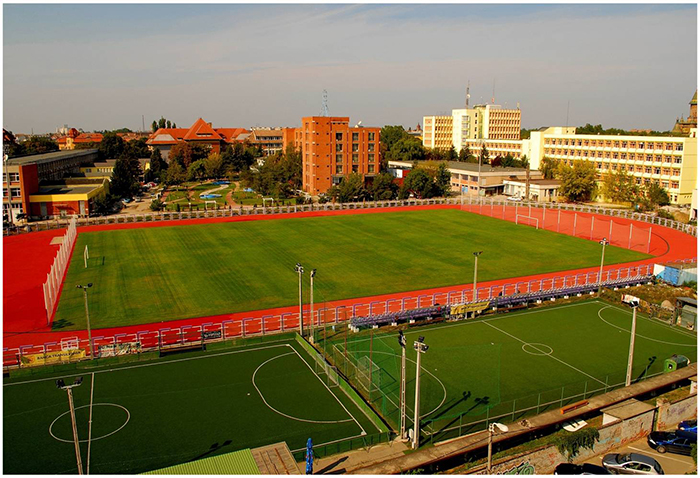
- Two mini-football pitches with artificial playing surfaces were developed at Sports Complex 1.
2007
- Development of Politehnica Park began.
- UPT obtained its first Erasmus Charter, providing the framework for academic staff and student mobility.
- Politehnica Printing House was established on the basis of the Reprographics Centre.
- The Student Information and Counselling Centre was established, with offices at each faculty.
2008
- The university’s largest lecture theatre, with 380 seats, was opened and named after the distinguished professor Alexandru Rogojan.
- At Sports Complex No. 1, a football pitch was developed with an automated irrigation system, floodlighting and a synthetic running track.
- The Senate Small Hall was created by restoring the former Senate Hall.
2009
- ARACIS awarded UPT the certificate of “University with a high degree of confidence”.
- UPT’s Virtual Campus was launched.
- Construction began on the Institute for Renewable Energy Research.
The 2000s: Modernisation and academic diversification12 fotografii
The 2010s: Preparing for the centenary and new horizons
2010
- To mark the 90th anniversary of the founding of the Politehnica School of Timișoara, King Michael I was awarded the title of Doctor Honoris Causa by UPT.
- Construction of the Multipurpose Hall began.
- The Politehnica Foundation was officially launched.
- Expansion of the Faculty of Chemistry began.
2011
- The Faculty of Communication Sciences was established.
- Politehnica University of Timisoara was included in the category of “Advanced Research and Education Universities”.
- Experimentarium TM, an interactive centre for demonstrating physical phenomena, was inaugurated.
2012
- The Centre for Renewable Energy Research began its activities.
2013
- The “Politehnica” University of Timișoara was renamed Politehnica University of Timisoara.
- The UPT Steering Committee was established, the only advisory body of its kind in Romania.
- Lloyd Palace, home to the Politehnica Rector’s Office, was architecturally illuminated.
2014
- The new UPT Library was inaugurated.
- The first edition of the “Politehnica Timișoara – A step towards your future!” event was held.
2015
- UPT ranked first in the “Public University Transparency Ranking”, compiled by the Romanian Academic Society (SAR), the National Alliance of Student Organisations in Romania (ANOSR) and the Swiss Student Union.
2016
- The leadership of Romania’s leading technical universities established the Romanian Alliance of Technical Universities (ARUT). UPT Rector Viorel-Aurel Șerban was elected its first president.
- SCImago Institutions Rankings placed Politehnica University of Timisoara second among Romanian universities.
2017
- The UPT Conference Centre was inaugurated.
- The annual report of the Romanian Academic Society ranked Politehnica University of Timisoara second in Romania.
2018
- In 2018, a bust of Victor Vlad, one of the founders of the Politehnica School of Timișoara, was unveiled in his honour. The event marked the beginning of a series of events dedicated to the centenary of Politehnica University of Timisoara.
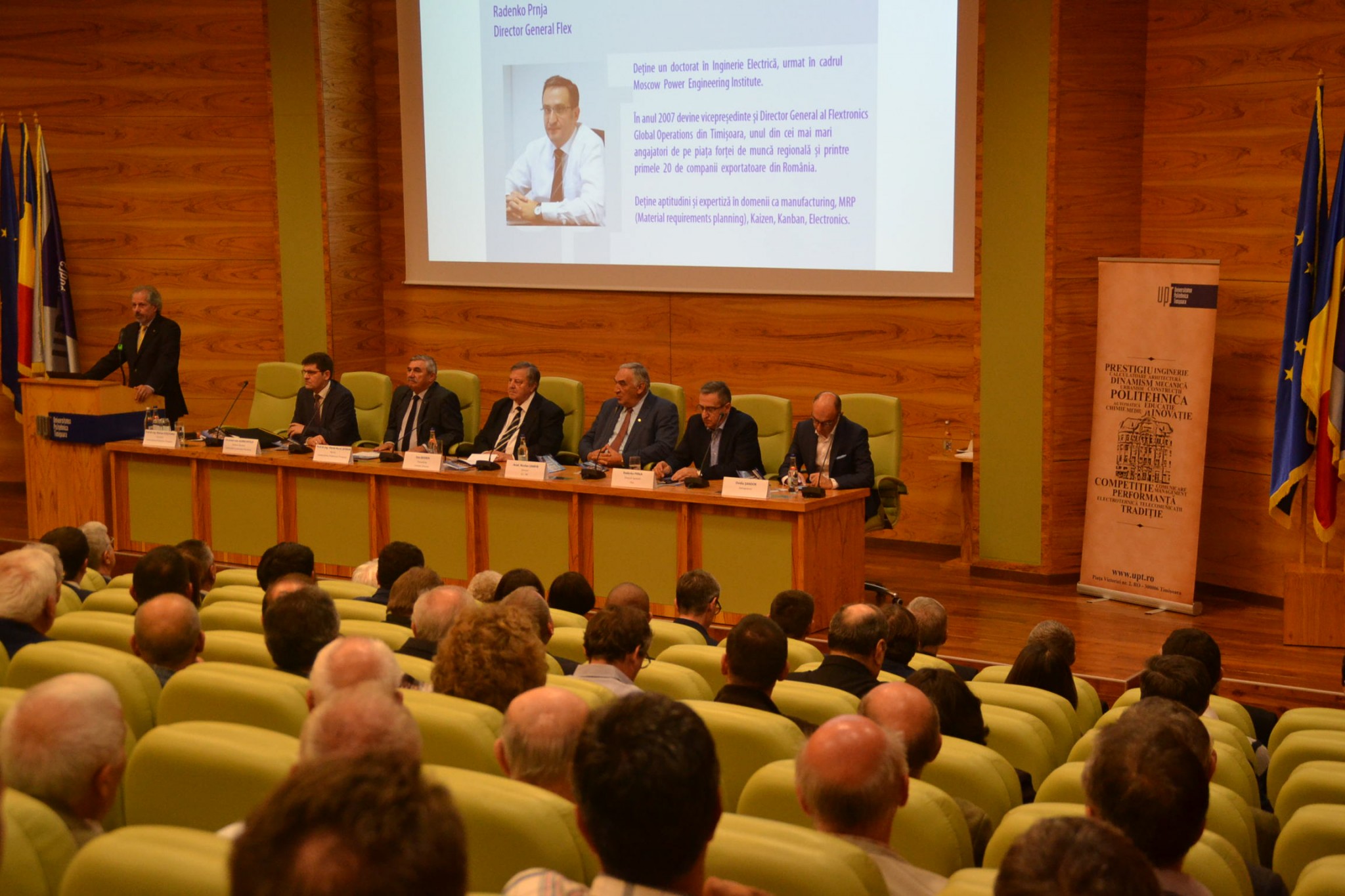
- The first meeting of the Academic Council was held. The advisory body, under the authority of the UPT Rector, brings together prominent members of the Politehnica academic community.
- A Google Digital Workshop was inaugurated at the Faculty of Management in Production and Transportation, the first of its kind to open at a technical university in Romania.
2019
- The West Regional Development Agency (ADR Vest) and UPT signed a funding agreement worth €5.8 million for the project “Modernisation, expansion and equipping of university educational infrastructure at the Faculty of Industrial Chemistry and Environmental Engineering”.
- Politehnica University of Timisoara launched the “Politehnica™ 100% performance” project, aimed at identifying and supporting 100 high-achieving young people from secondary schools in the region. Each student received a €1,000 excellence award and was connected with one of 100 mentors from among UPT’s successful alumni.
- Teleuniversitatea TV became the first student television station in Romania to broadcast via cable.
- UPT was included in international rankings in two engineering fields. In Mechanical, Aeronautical and Manufacturing Engineering, UPT ranked among the top 350 universities worldwide and 1st–2nd in Romania, tied with Politehnica University of Bucharest. In Electrical and Electronic Engineering, it ranked among the top 500 universities worldwide and third nationally.
- According to the Times Higher Education rankings, UPT ranked second among Romanian universities and first among technical universities.
The 2010s: Preparing for the centenary and new horizons14 fotografii
The 2020s: Politehnica for the new century
2020
- Timișoara City Council adopted a decision declaring 2020 the “Year of Politehnica in Timișoara”.
- Romfilatelia launched a postage stamp issue in Timișoara dedicated to the centenary of Politehnica University of Timisoara.
- The National Bank of Romania issued a commemorative coin marking the 100th anniversary of Politehnica University of Timisoara.
- E³UDRES², a European university alliance of which UPT is a founding member, was officially launched.
2021
- The 100th anniversary of the establishment, on 4 December 1921, of the Politehnica Timișoara Sports Association was celebrated. Over the years, the association has become a symbol of the city.
- Politehnica University of Timisoara became the first university in Romania to sign the Diversity Charter, an initiative of the European Commission.
2022
- Politehnica University of Timisoara and the artistic organisation META Spațiu joined forces to create MV sci-art, a landmark cultural centre for the city on the Bega.
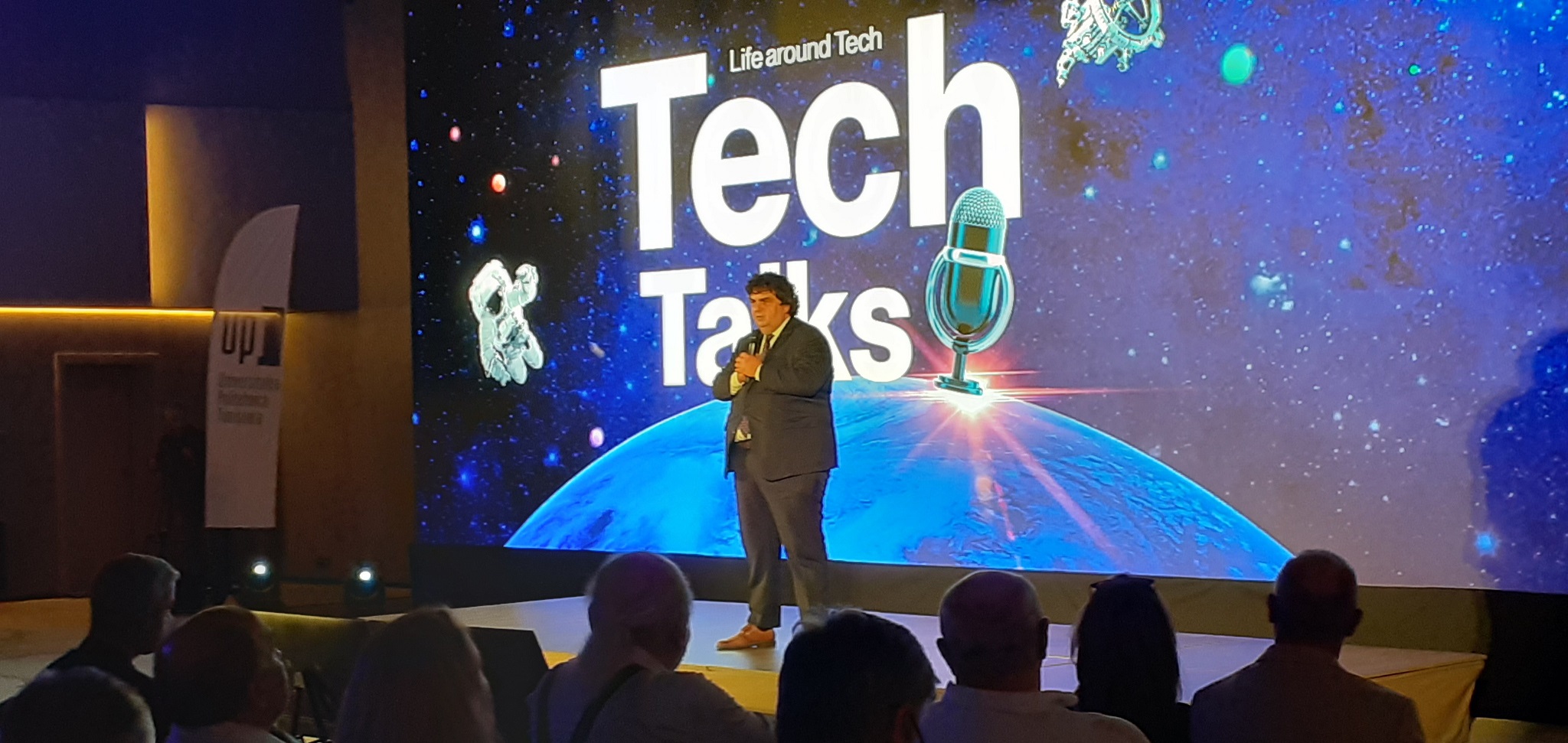
- UPT organised the first edition of Tech Talks, the most important technology conference in the region.
2023
- UPT Creative Campus was established, positioning Politehnica as a major contributor to the TM2023 programme and to the legacy of the European Capital of Culture.
- The 100th anniversary of the inauguration of Politehnica’s first purpose-built building was celebrated, marking, in effect, the birth of the Timișoara University Campus.
2024
- Major modernisation works began at UPT’s sports facilities.
- The new premises of the Faculty of Industrial Chemistry and Environmental Engineering were inaugurated.
- An extensive programme to modernise student halls of residence was launched.
- UPT launched Romania’s first dual bachelor’s degree programme in Robotics.
- The ELITh anniversary gala was held to mark 100 years since the graduation of UPT’s first cohort.
2025
- UPT launched the first dual master’s degree programme in Romania, entitled “Sustainable Development in Water Engineering”.
- A UPT team established the first quantum communication link in western Romania through the Timișoara metropolitan QKD network, marking an important step in the development of the national quantum communications infrastructure.
- The new sports hall on Ghirodei Alley was inaugurated.
The 2020s: Politehnica for the new century12 fotografii